The Illegal Lion Trade Crisis
What’s Happening . . .
The System Behind It . . .
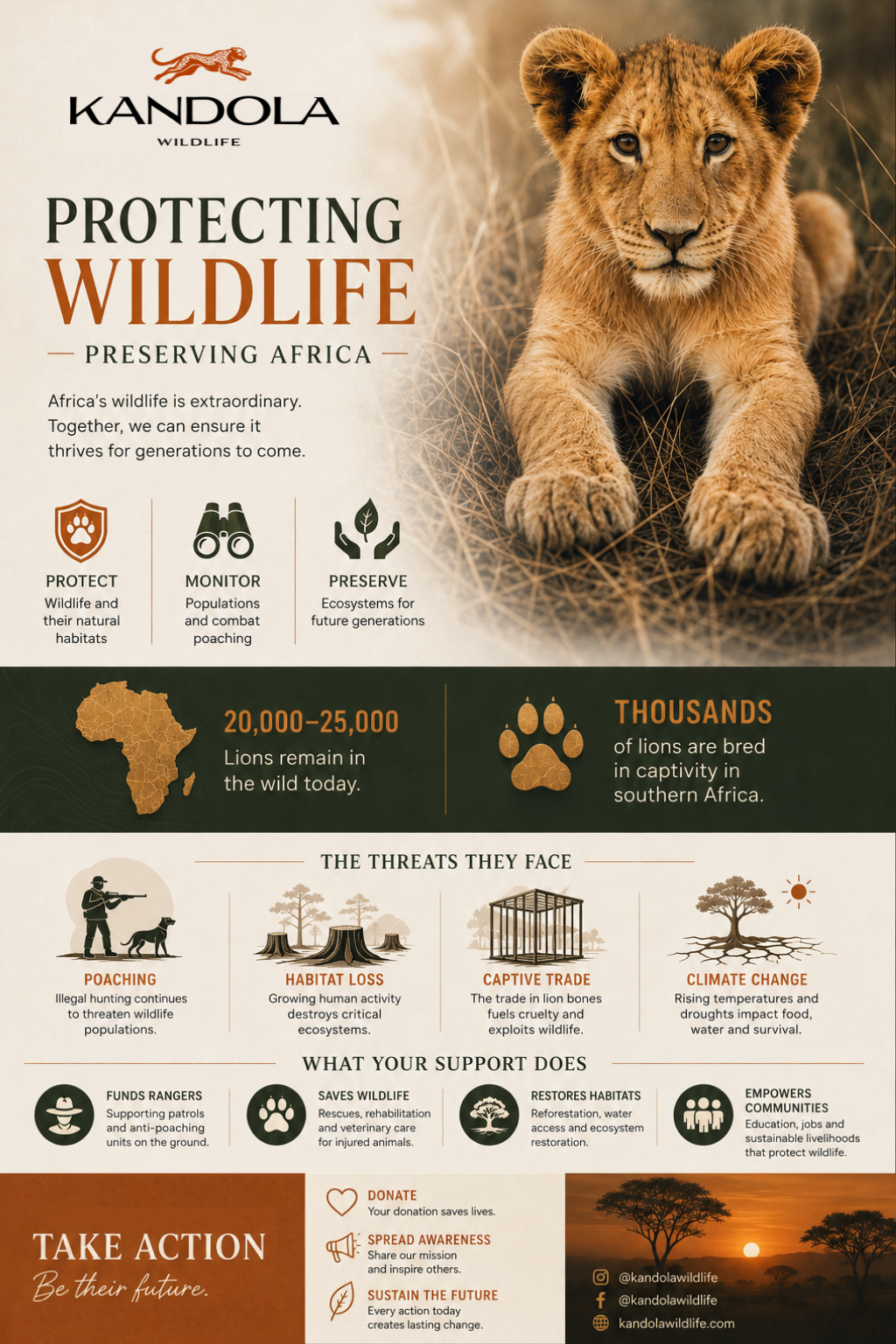
Lions are taken from the wild and bred in captivity for profit.
This includes cub petting tourism, canned hunting, and the growing trade of lion bones into international markets.
This industry exists because it is profitable and because regulation is often weak or inconsistent. Legal loopholes allow captive breeding, tourism, and trade to operate in ways that blur the line between conservation and exploitation.
Why It Matters . . .
Wild lion populations are already in decline. Removing lions from ecosystems and normalizing their exploitation accelerates that loss and weakens the balance of entire habitats.
What Can Be Done . . .
Avoid facilities that exploit lions for tourism. Support organizations working to end captive breeding and illegal trade. Push for stronger protections and enforcement.
Over 200,000 lions in the early 1900s to roughly 20,000 today.

Lions
Lions (Panthera leo) are one of Africa’s most iconic predators, found primarily across sub-Saharan regions including Kenya, Tanzania, South Africa, and Botswana, with a small population in India.
They live in social groups called prides, relying on cooperation for hunting and survival.
As apex predators, lions play a critical role in maintaining ecosystem balance.
Today, wild populations are declining due to habitat loss, human conflict, and exploitation through illegal trade.
And they are being pushed closer to extinction every year.