The Ivory Trade Crisis
What’s happening . . .
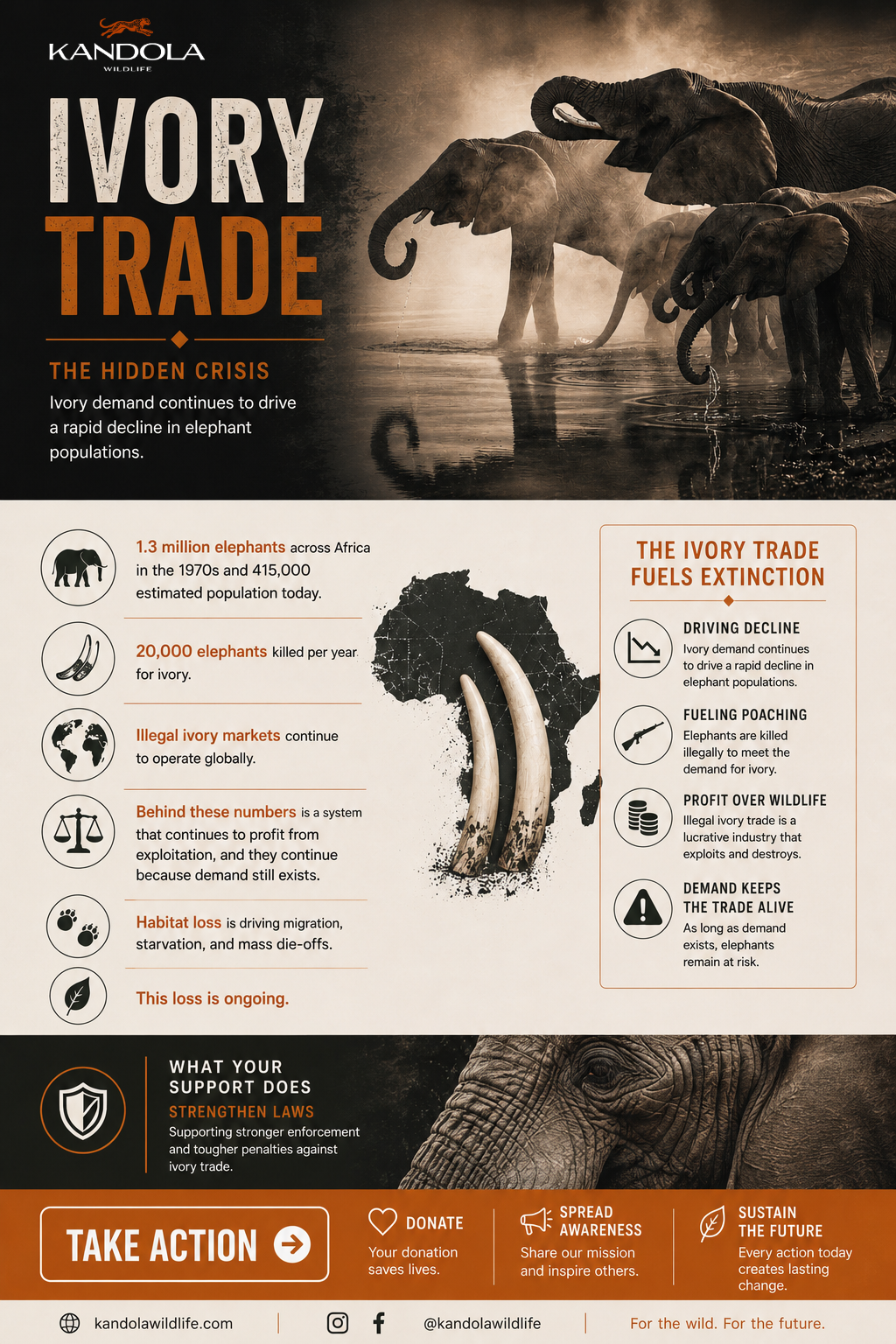
Elephants are killed for their tusks, which are sold into illegal global markets. Despite international bans, ivory continues to be trafficked and turned into luxury goods.
Why it matters . . .
This demand has driven severe population declines and continues despite global awareness and regulation. The loss of elephants disrupts ecosystems they help sustain.
The system behind it . . .
The ivory trade is sustained by black markets, weak enforcement, and persistent global demand. It continues because it remains profitable.
What can be done . . .
Ending demand is critical. Strengthening enforcement and supporting conservation efforts are essential to protecting remaining populations.
1.3 million elephants across Africa in the 1970s to 415,000 estimated today.

Elephants
African elephants (Loxodonta africana) are the largest land animals on Earth, found across sub-Saharan Africa.
They are highly intelligent, social animals, living in complex family groups led by matriarchs.
Elephants play a critical role in shaping ecosystems. Dispersing seeds, creating water access, and maintaining landscapes that support other species.
Their tusks, made of ivory, have made them a primary target for poaching.