The Illegal Ivory Trade — What It Really Costs
Updated: Aug 21
KANDOLA WILDLIFE

Ivory is often marketed as a luxury item, a symbol of wealth and status. However, the reality behind it is far from luxurious. Ivory products are violence on display, a reminder of the brutal killing of elephants for their valuable tusks.
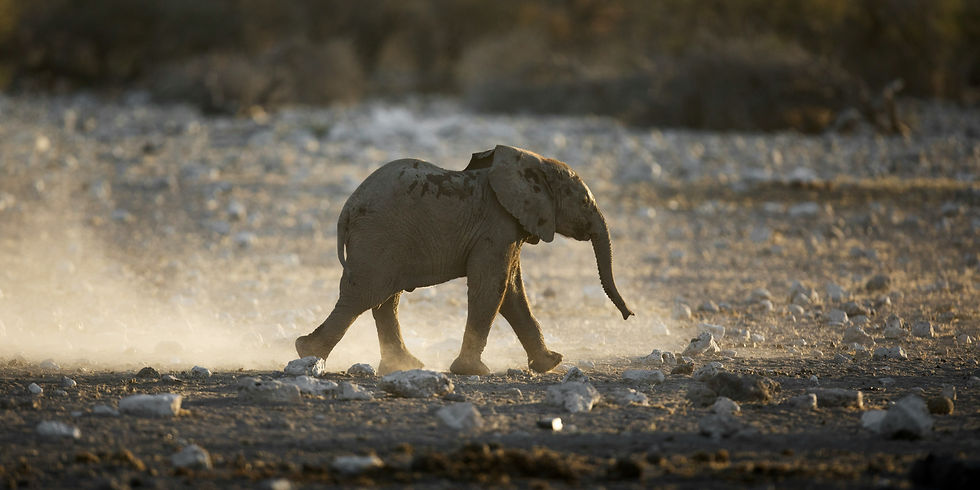
One-third of an elephant's tusk is deeply embedded inside its skull so poachers routinely use axes and chainsaws to hack away the animal's face after death. An elephant's tusks are not decorative features; they are part of its natural anatomy, used for defense and digging. Poachers infiltrate their habitats, killing entire family units and leaving behind orphaned calves to fend for themselves. These young elephants can face severe trauma and significantly reduced chances of survival without their mothers.
Despite international restrictions, the illegal ivory trade continues because demand still exists. Illegal ivory is frequently disguised as legal, enforcement remains inconsistent, and many buyers never question where it came from.
The consequences are devastating.
The impact of ivory poaching has been so severe that it is influencing the species itself with an increasing number of elephants in heavily poached regions now being born without tusks.
African elephant populations have fallen dramatically from an estimated 1.3 million in the 1970s. A 2016 IUCN assessment estimated roughly 415,000 elephants across Africa. Across parts of Africa, decades of poaching and habitat loss have severely reduced and fragmented elephant populations.

The ivory trade does not only kill elephants. It destabilizes ecosystems, fuels criminal networks, and weakens conservation efforts across Africa. Elephants are keystone species. Their survival shapes entire ecosystems, from forests to grasslands. When elephants disappear, the damage extends far beyond a single species.
What You Can Do
• Never purchase ivory in any form.
• Avoid brands that cannot verify ethical sourcing.
• Educate others about the reality behind ivory.
• Support trusted conservation organizations and anti-poaching efforts.
• Sign petitions and support campaigns pushing for stronger wildlife trade bans and elephant protection laws:
WWF
Born Free Foundation

The Reality
There is no ethical ivory.
Only a system that turns living beings into products.


