Cheetah
Built for speed. Fighting for survival.
Sleek, aerodynamic, and built for the chase, Earth's ultimate sprinter lives life in the fast lane. The cheetah is the fastest land mammal on Earth, capable of accelerating from 0 to 100 km/h in just three seconds. Yet despite their incredible athletic ability, cheetahs have disappeared from more than 90% of their historic range and now exist in increasingly fragmented populations across Africa and parts of Iran.
The first fossil records of cheetah (Acinonyx) date from approximately 4 million years ago.
Scientific Name: Acinonyx jubatus
Wild Population: Approximately 6,500
Current Population Trend: Decreasing
Historic Range Loss: Over 90%
Habitat: Grasslands, savannas, semi-deserts, dry forests, open woodlands, and shrublands
Social Structure: Mostly solitary, although males may form coalitions
Lifespan: 10–12 years in the wild
Weight: 34 to 64 kg (75 to 140 lbs) | Males are slightly larger than females.
Top Speed: Up to 112 km/h (70 mph)
Acceleration: 0–100 km/h in approximately 3 seconds
Diet: Carnivore
As a whole species, the cheetah (Acinonyx jubatus) are listed as vulnerable on the IUCN Red List, which means they are at high risk of extinction in the wild.
Of the four genetically recognized cheetah subspecies, the Northwest African and Asiatic cheetahs are classified as Critically Endangered.
In 2022, some Southeast African cheetahs were introduced to India as part of a major rewilding project to bring cheetahs back to Asia, since the native Asiatic subspecies was declared extinct there in 1952.
_edited.jpg)

_edited.jpg)
About Cheetahs
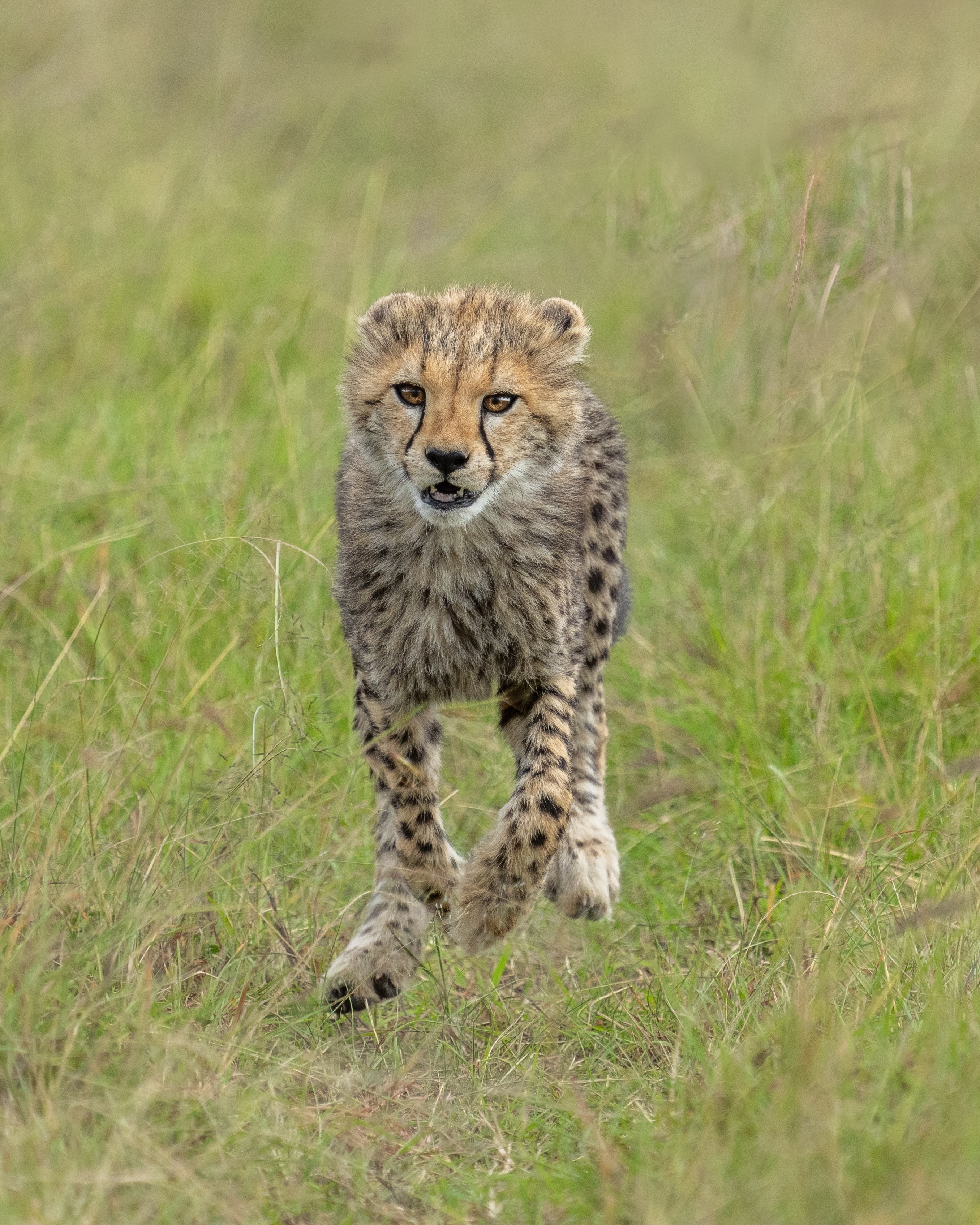
Cheetahs are built unlike any other big cat. Their flexible spine acts like a spring during a chase, allowing the body to stretch and contract dramatically with every stride. Their long tail acts as a rudder for balance and steering, while semi-retractable claws provide grip during rapid turns at high speeds. Most chases last less than a minute and cover only a few hundred metres before the cheetah risks overheating. Unlike lions, leopards, and jaguars, cheetahs cannot roar. Instead, they communicate through chirps, purrs, growls, and distinctive bird-like calls. Unlike many large predators, cheetahs are primarily active during the day, which can help reduce competition with lions, leopards, and hyenas, although they may also be active at night. This strategy allows cheetahs to occupy a distinct ecological niche among Africa’s predators.
Unlike lions, leopards, or tigers, wild cheetahs are remarkably non-aggressive toward humans. Because they are built for lightweight speed rather than raw power, their primary defence is flight rather than confrontation. If a human walks up to a wild cheetah, it doesn't see a meal or an opponent; it sees a threat it needs to run away from. Because an injury as simple as a sprained leg means they can no longer hunt, resulting in starvation.
Long before they were recognized as a modern conservation priority, cheetahs were revered as the ultimate symbols of supreme royalty, wealth, and power. For thousands of years, emperors and pharaohs across Africa, the Middle East, and Asia kept these magnificent cats as exotic companions. Walking a tamed cheetah on a leash was a ruler's visual proof that they could conquer the wild, making the cheetah a living emblem of prestige and sophistication.




The Next Generation
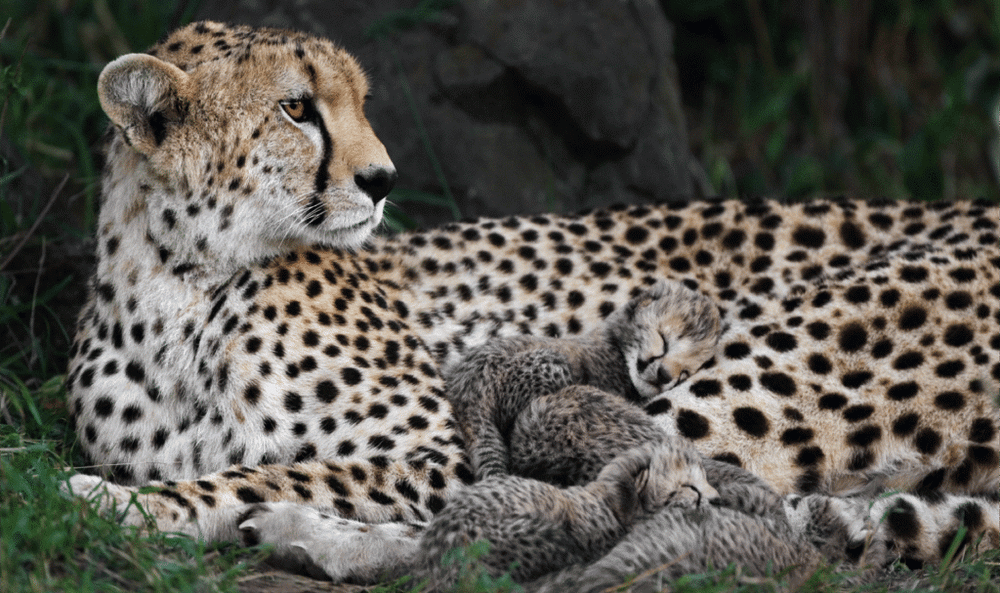
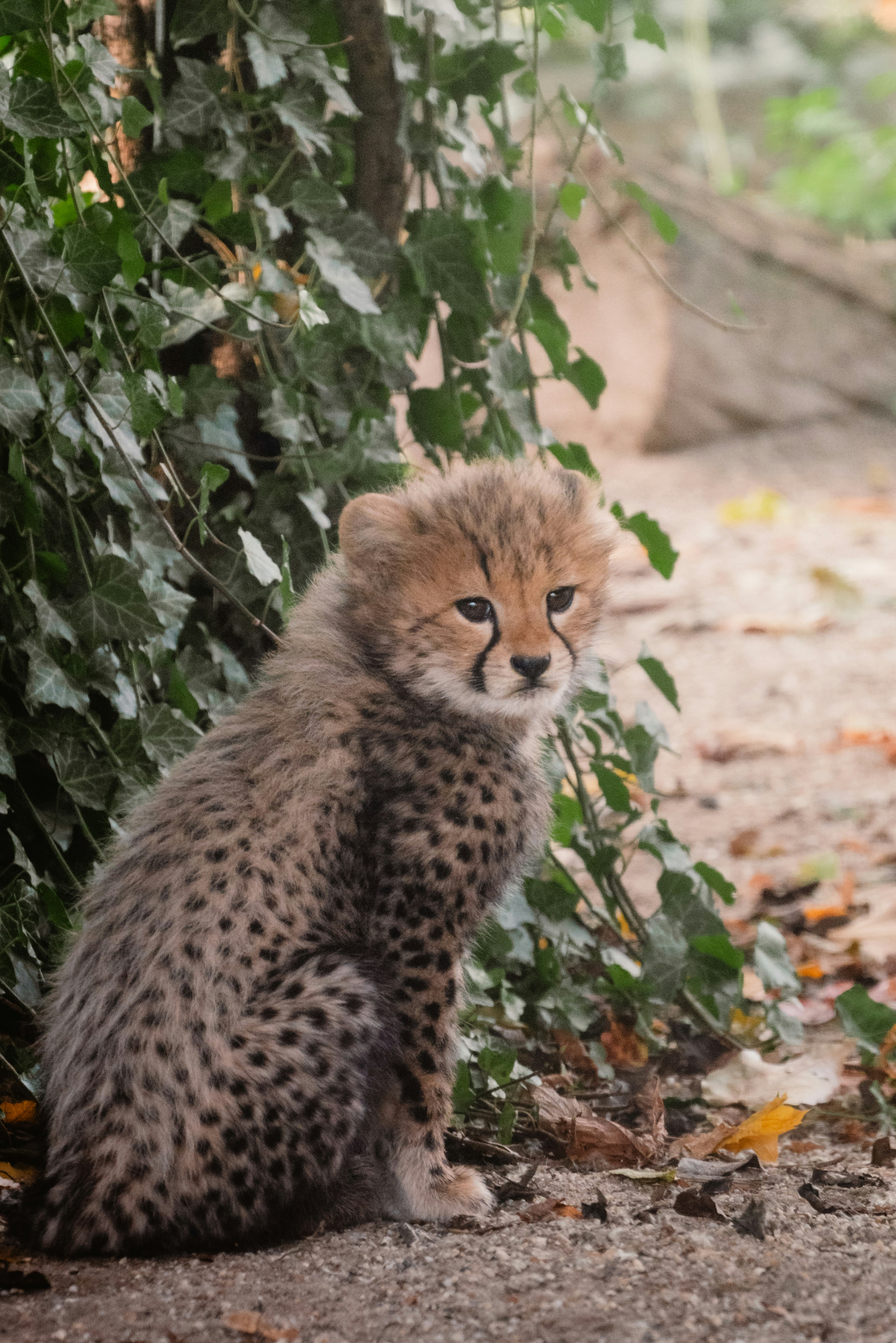
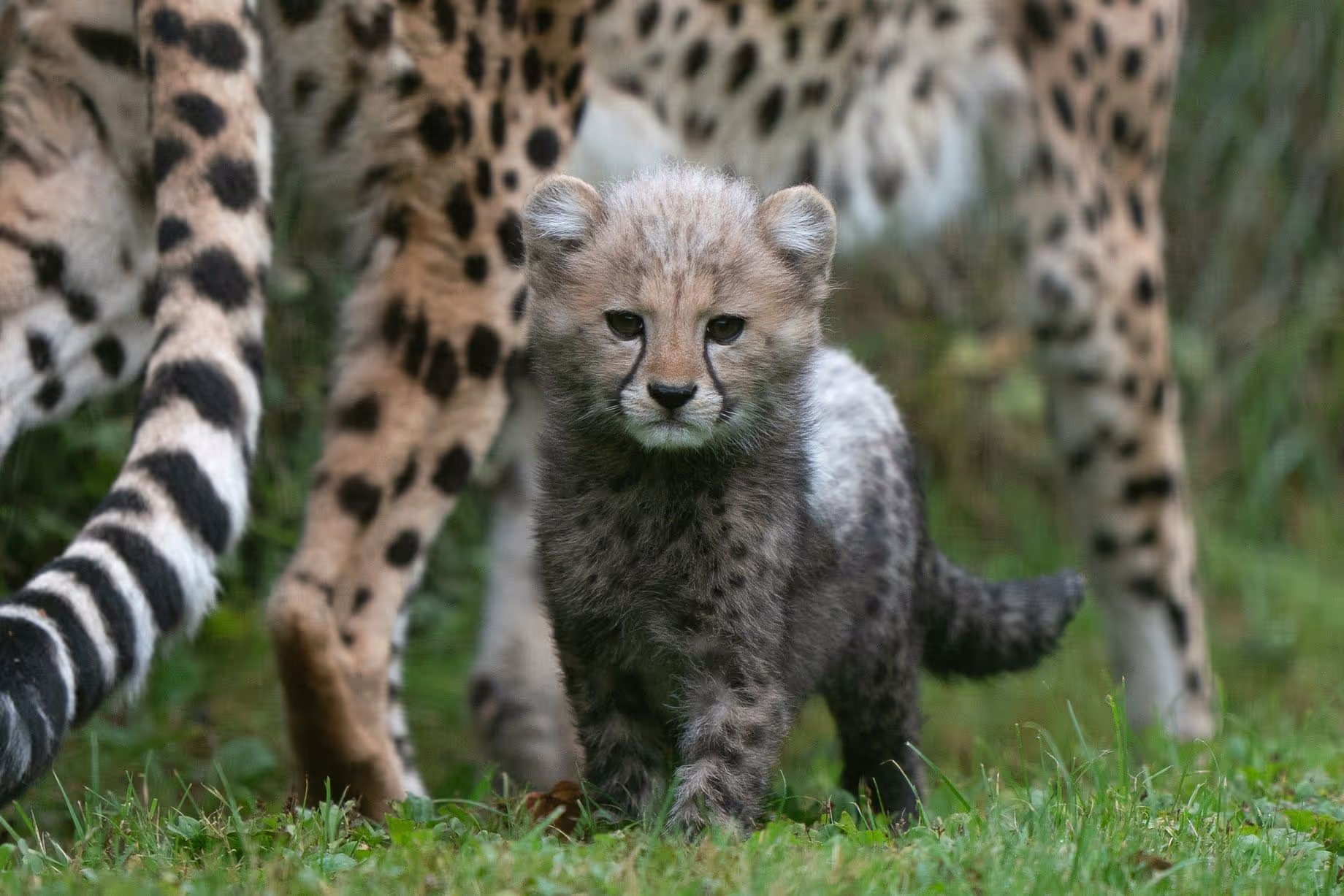
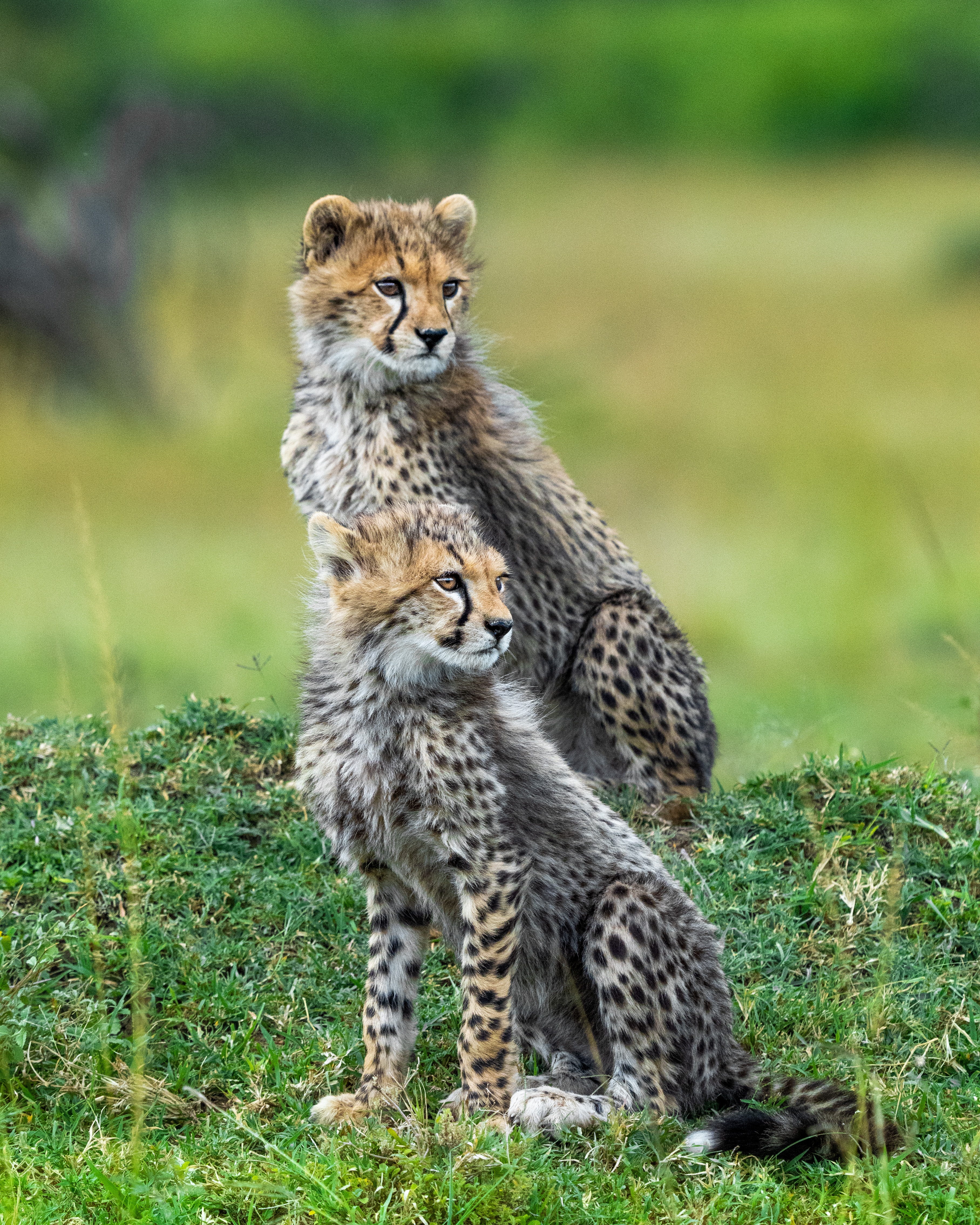
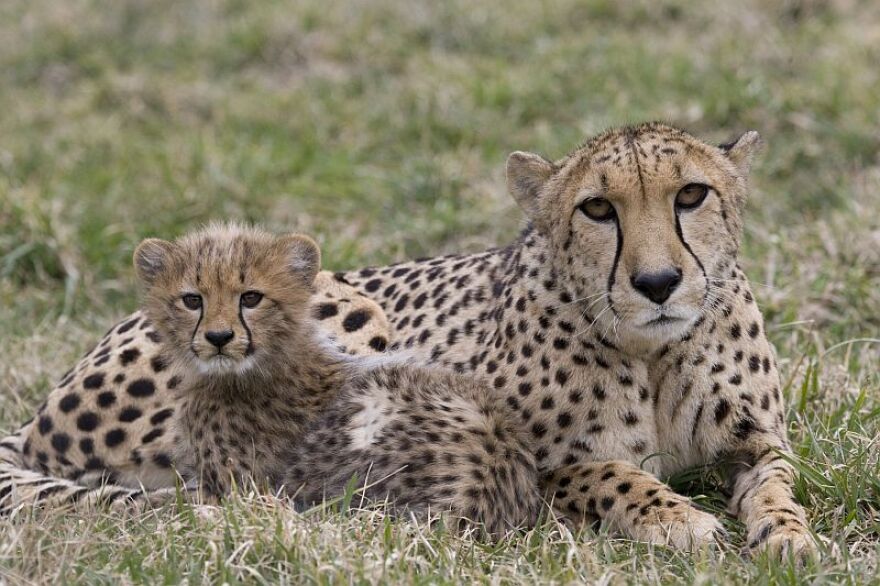
After a three-month pregnancy, a cheetah mother finds a hidden patch of tall grass or thick brush to give birth to a litter of one to six cubs. Because cheetahs do not live in groups, the mother has to raise them all on her own, leaving them hidden in the grass while she goes out to hunt. To keep them safe from larger predators, she moves the blind cubs to a new hiding spot every few days. When the cubs are about six weeks old, they start following her on hunts. Their long silver-grey mantle may help camouflage them in tall grass and has also been suggested to resemble a honey badger from a distance. The cubs practice their speed by chasing each other, staying with their mother for about a year and a half until they are fast enough to survive on their own.

Did you know?
A cheetahs spots are completely unique. Much like human fingerprints, no two cheetahs have the exact same pattern of spots.
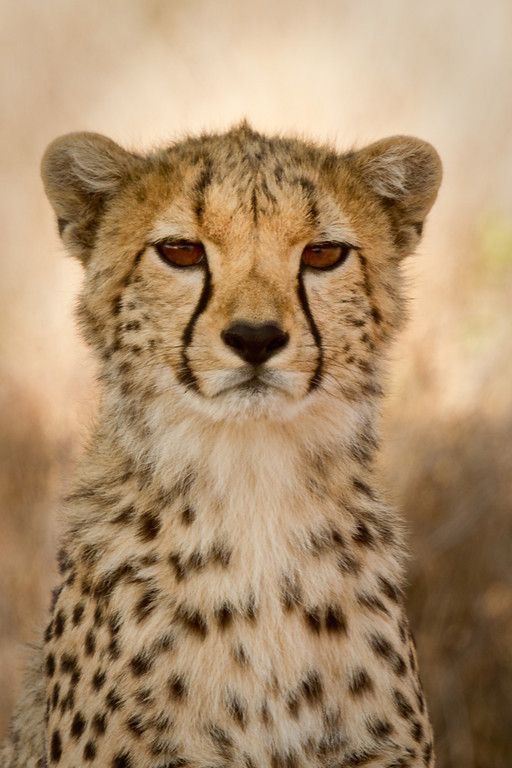
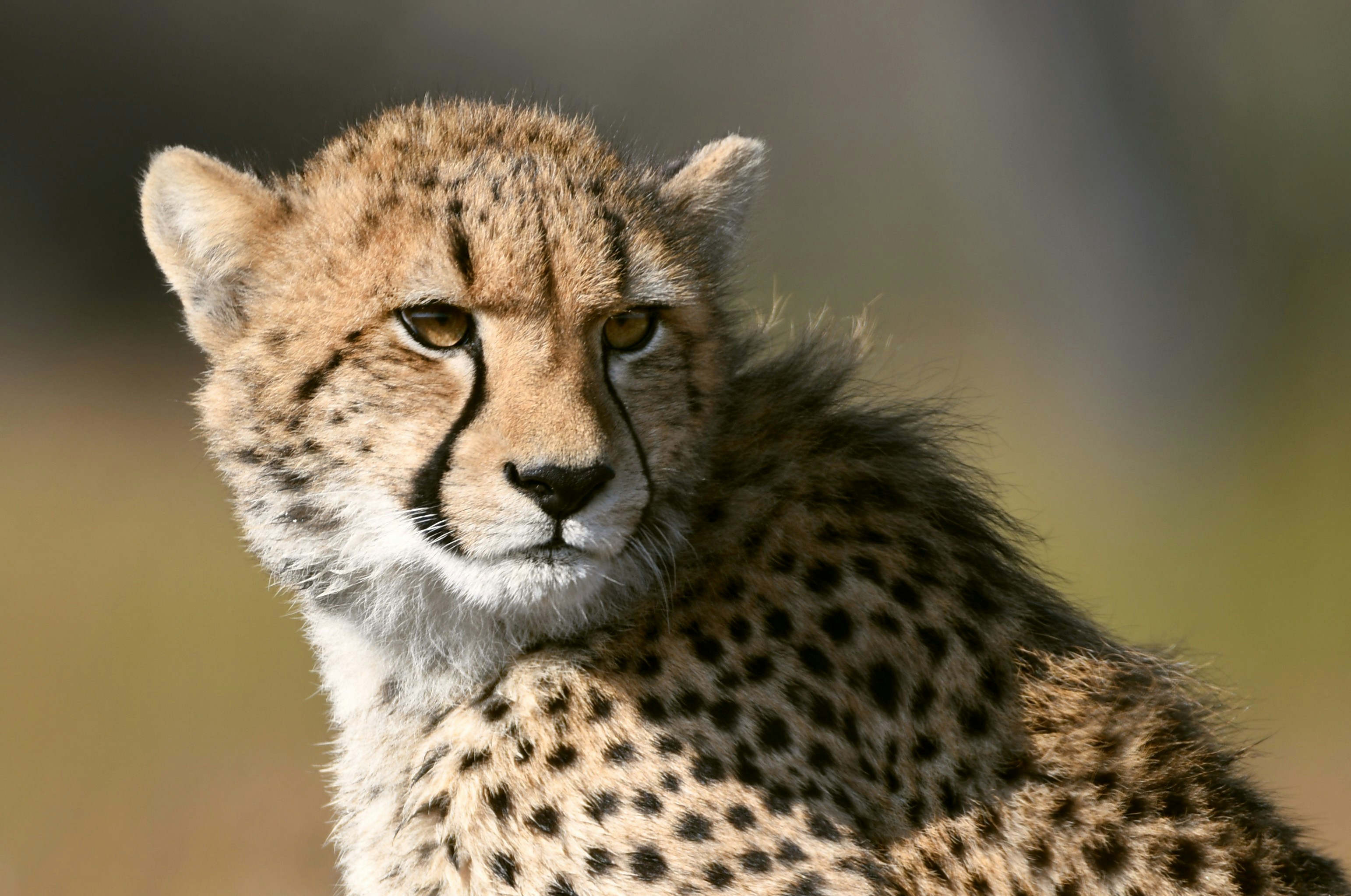
Their iconic "tear tracks" may help reduce glare. The black facial markings run from the inner corners of the eyes toward the mouth absorb sunlight, reducing glare while they hunt in the bright daylight.
Males may stick together for life. Brothers often form coalitions of two or three males, although unrelated males can also form these alliances. They will hunt and defend territory together, while females live mostly alone.
They are the ultimate ghosts of the grass. Despite their speed, a cheetahs primary hunting tool is actually stealth; their tawny coats allow them to blend seamlessly into dry savannah grass until they are within striking distance.

Where They Roam
Historically, cheetahs were among the most widely distributed predators on Earth, ruling a vast territory that stretched continuously across nearly all of Africa, the Middle East, and India. Today, that grand kingdom has shattered; they have vanished from over 90% of their historic range. Most remaining wild cheetahs are confined to fragmented strongholds in southern and eastern Africa, while a tiny, Critically Endangered population survives in Iran.


-Na-an-ku-se-Research-Project_1100.jpg)
Why Cheetahs Matter
As specialised predators of medium-sized antelope and other prey, cheetahs contribute to the balance of grassland and savanna ecosystems. Their need for vast, connected landscapes also means that protecting cheetah habitat benefits many other species sharing the same ecosystems.
Threats
Habitat Loss and Fragmentation
Expanding agriculture, roads, and fencing continue to slice up the open savannas cheetahs need to sprint and survive, isolating populations into dangerously small pockets.
Prey Depletion
Cheetahs depend heavily on medium-sized antelope and other wild prey. Hunting, bushmeat poaching, and habitat degradation can reduce these prey populations, forcing cheetahs to travel farther for food and increasing the likelihood of conflict with livestock owners.
Human-Cheetah Conflict
As their natural territory shrinks, cheetahs sometimes hunt livestock out of necessity, frequently leading to fatal retaliatory killings by protective farmers.
Genetic Vulnerability
Due to an ancient evolutionary bottleneck, modern cheetahs possess remarkably low genetic diversity. This leaves entire populations highly vulnerable to sudden disease outbreaks and environmental shifts.
Illegal Wildlife Trade
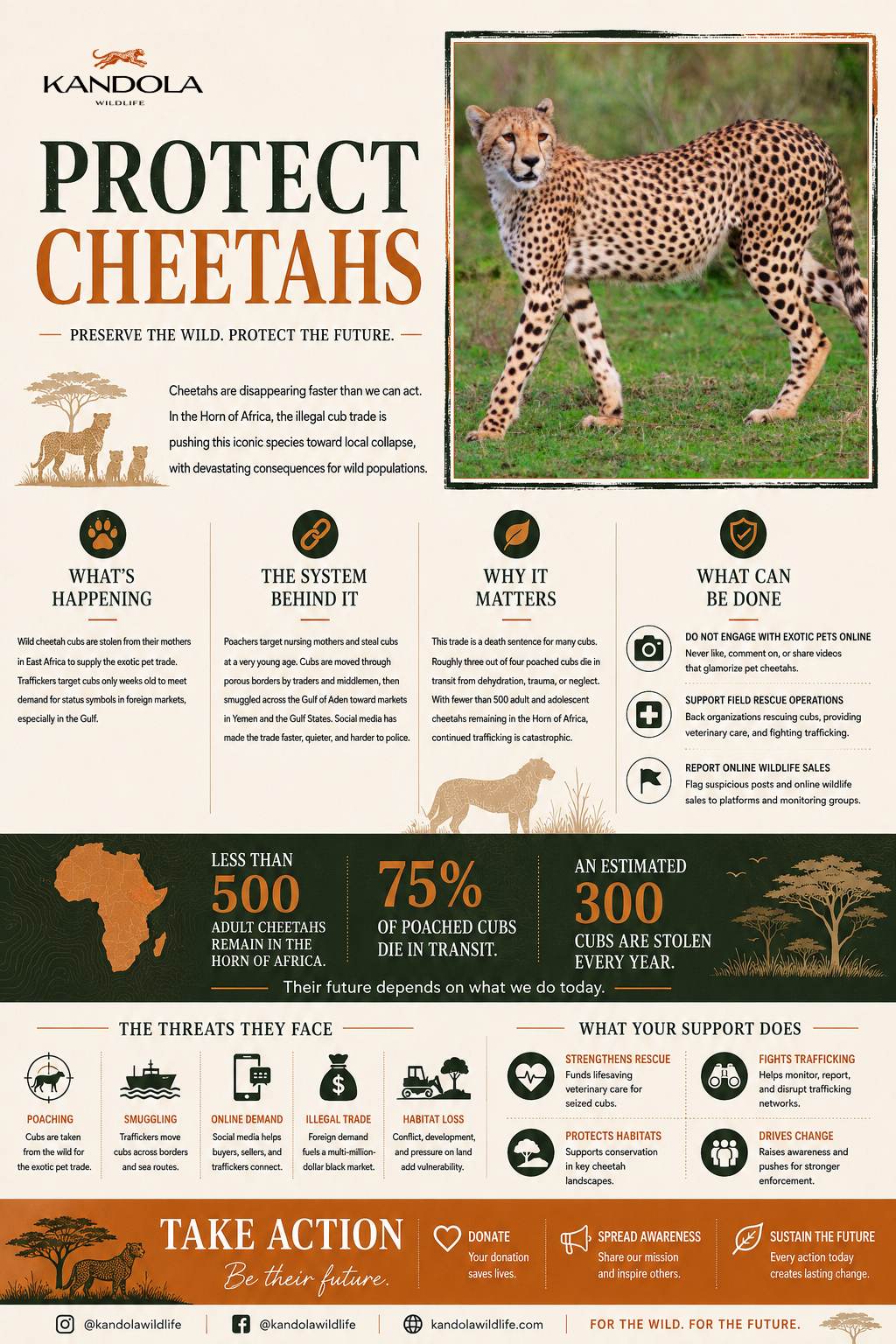
Driven by demand in the exotic pet trade, wild cheetah cubs are poached and trafficked from the Horn of Africa toward markets in the Arabian Peninsula. Many cubs die during capture and transport. Mortality among confiscated cubs in Somaliland and Ethiopia has been reported as high as 70%.

The Illegal Wildlife Trade
What’s Happening . . .
The System Behind It . . .
Wild cheetah cubs are being poached from their mothers in East Africa to supply a lucrative black market. Driven by demand for exotic pets, particularly in parts of the Middle East, wild cubs are treated as high-priced luxury status symbols. This illicit trade is pushing already vulnerable regional populations closer to extinction.
The trade targets the highly endangered Northeast African cheetah population. Driven by poverty or local conflict, poachers track nursing mothers and snatch cubs at just a few weeks old. Traffickers buy these cubs for a low price, then use motorcycles and boats to smuggle them across porous borders—primarily out of Ethiopia and Somalia, through Somaliland, and across the Gulf of Aden into Yemen.
The internet has supercharged this trade, with roughly 70% of transactions arranged quietly via social media platforms. By the time a surviving cub reaches its final destination in the Gulf States, it can command a black-market price of up to $30,000.
Why It Matters . . .
This trade can be devastating for already fragile cheetah populations. Cheetah cubs are incredibly fragile, and due to the horrific, cramped, and neglectful conditions during smuggling, three out of every four poached cubs die in transit from dehydration and trauma.
Estimates suggest that around 300 cubs may be taken from the Horn of Africa each year, with many dying during capture and transport. With the region’s wild adult cheetah population estimated at fewer than 500, losses on this scale are pushing these already vulnerable populations closer to extinction.
What Can Be Done . . .
Do not engage with exotic pet content online: Avoid liking, commenting on, or sharing posts that glamorize privately owned cheetahs. Online engagement can increase the visibility of this content and help normalize demand for exotic pets.
Support field rescue operations: Back organizations on the front lines of the crisis. You can learn about rescue missions and veterinary care at the Cheetah Rescue and Conservation Centre via the Cheetah Conservation Fund (CCF).
Report online wildlife sales: If you encounter live cheetahs or other endangered wildlife being offered for sale on social media or e-commerce platforms, flag and report the accounts directly to the platform or to wildlife trade monitoring networks like TRAFFIC.
The world’s fastest land mammal is running out of time.


.png)

Conservation Efforts
Namibia: The Cheetah Capital
Namibia is one of the world’s most important strongholds for wild cheetahs and has become a global pioneer in cheetah conservation. More than 90% of the country’s cheetahs live outside protected areas, many on commercial and communal farmland. As a result, conservation efforts increasingly focus on helping cheetahs and people coexist across working landscapes.
The Serengeti Cheetah Project
The Serengeti-Mara ecosystem is one of Africa’s most important landscapes for cheetah research and conservation. The Serengeti Cheetah Project has studied wild cheetahs for decades, tracking individuals and population dynamics while helping scientists understand ranging behaviour, reproduction, survival, and interactions with larger predators. Its long-term research has contributed substantially to what we know about cheetahs in the wild.
The Cheetah Conservation Fund (CCF)
Founded in Namibia in 1990, CCF is one of the world’s leading organizations dedicated to cheetah research and conservation. The organization conducts scientific research, rescues and rehabilitates cheetahs, combats illegal trafficking, restores habitat, and works directly with communities to develop livelihoods and land-use practices compatible with wildlife conservation.
Community Partnerships & Livestock Guardians
Much of the cheetah’s future depends on successful coexistence with rural communities. Livestock-guarding dog programs provide farmers with breeds such as Anatolian Shepherds and Kangals that live alongside herds and deter predators without killing them. By reducing livestock losses, these programs can also reduce the retaliatory killing of cheetahs.
CCF has used livestock-guarding dogs in Namibia for decades as part of a broader strategy that combines predator-friendly farming, education, and community engagement. The approach protects livelihoods while allowing cheetahs to survive across landscapes shared with people.