Pangolin
Armoured by nature. Defenceless against demand.
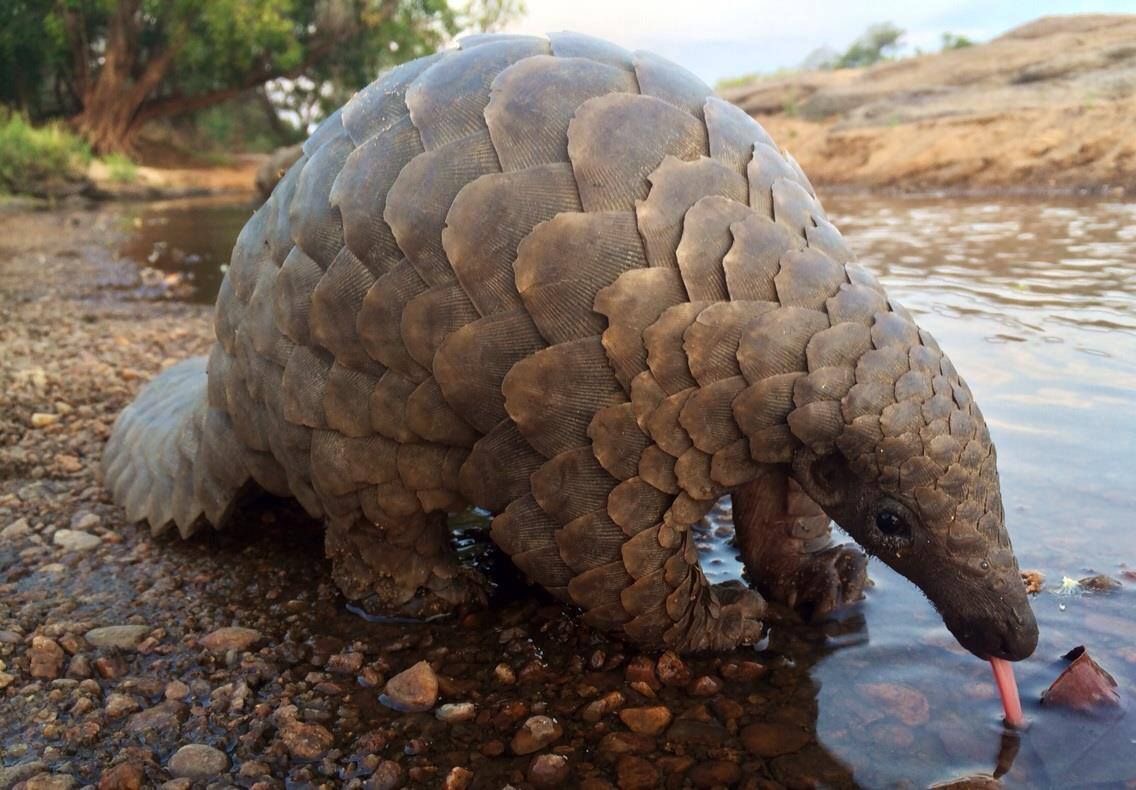
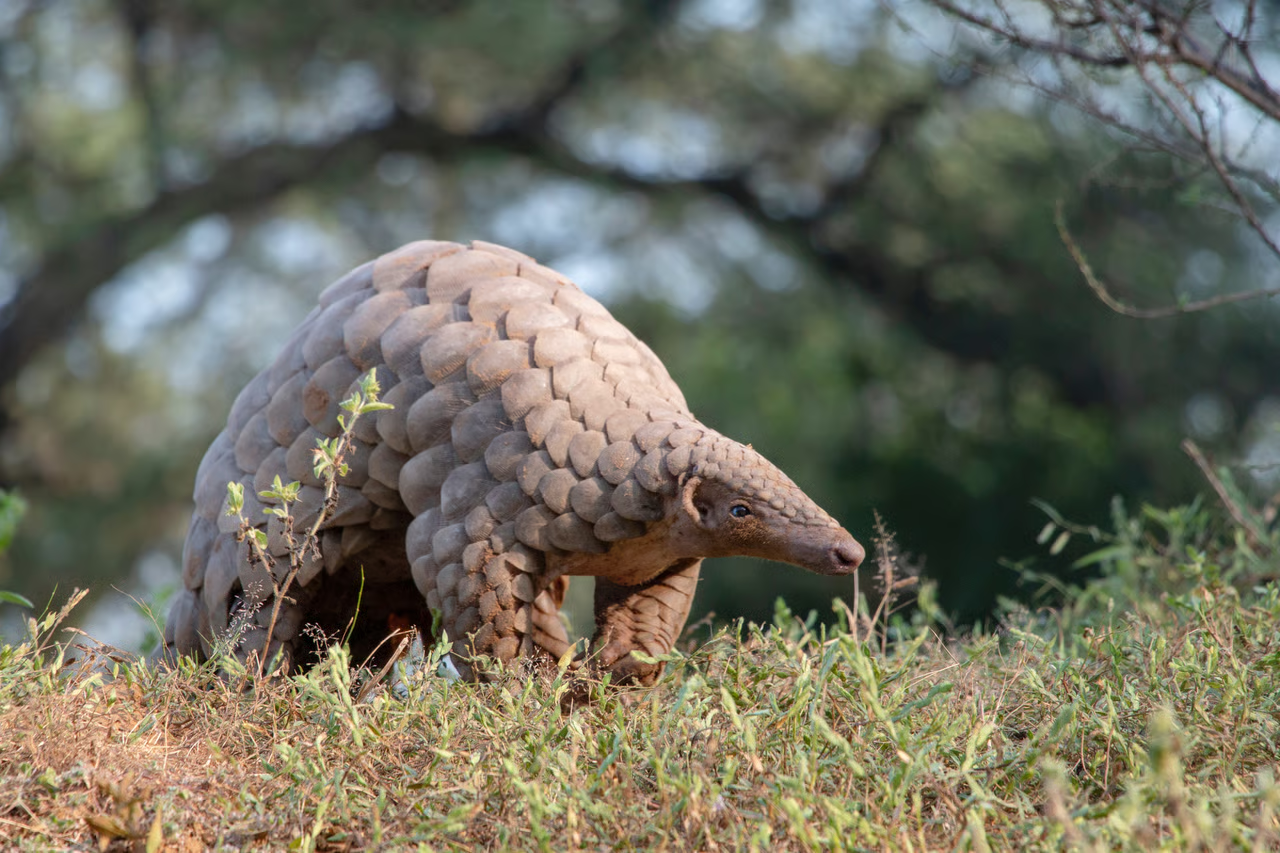
The world’s only truly scaly mammals, pangolins are found across parts of Africa and Asia and are widely regarded as the most heavily trafficked wild mammals in the world. When moving across the ground, some pangolins walk on their hind legs with their front claws curled toward the body, giving them an almost T. rex-like appearance. Targeted primarily for their scales and meat, they have been pushed into a global conservation crisis driven by illegal wildlife trade, habitat loss, and relentless human demand. Despite international protections, trafficking continues to threaten all eight surviving species and their future in the wild.
Pangolins have an evolutionary history stretching back more than 40 million years, with the earliest known pangolin fossils dating to roughly 45 million years ago. The African and Asian pangolin lineages diverged approximately 38 million years ago.

Scientific Name: Order Pholidota, Family Manidae
Wild Population: Unknown — no reliable global estimate exists
Current Population Trend: Decreasing
Number of Species: 8
Habitat: Tropical forests, woodlands, savannas, grasslands,
and scrublands
Social Structure: Solitary
Lifespan: Not well established in the wild | Up to approximately 20 years recorded in captivity
Weight: Approximately 1.5 to 33 kg (3.3 to 73 lbs), depending
on the species
Activity: Predominantly nocturnal
Diet: Insectivore — primarily ants and termites
All eight pangolin species are threatened with extinction on the IUCN Red List. Three are Critically Endangered, three are Endangered, and two are Vulnerable.
There are eight distinct pangolin species, split evenly between Africa and Asia.
.png)
_edited.jpg)
_edited.jpg)
_edited.jpg)
_edited.jpg)
_edited.jpg)
About Pangolins
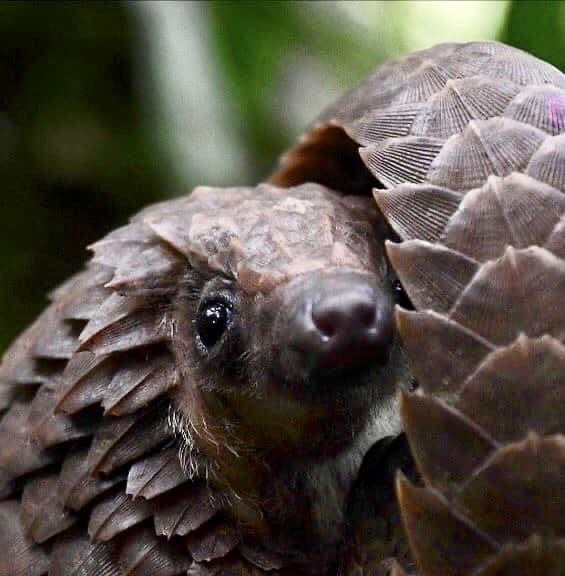
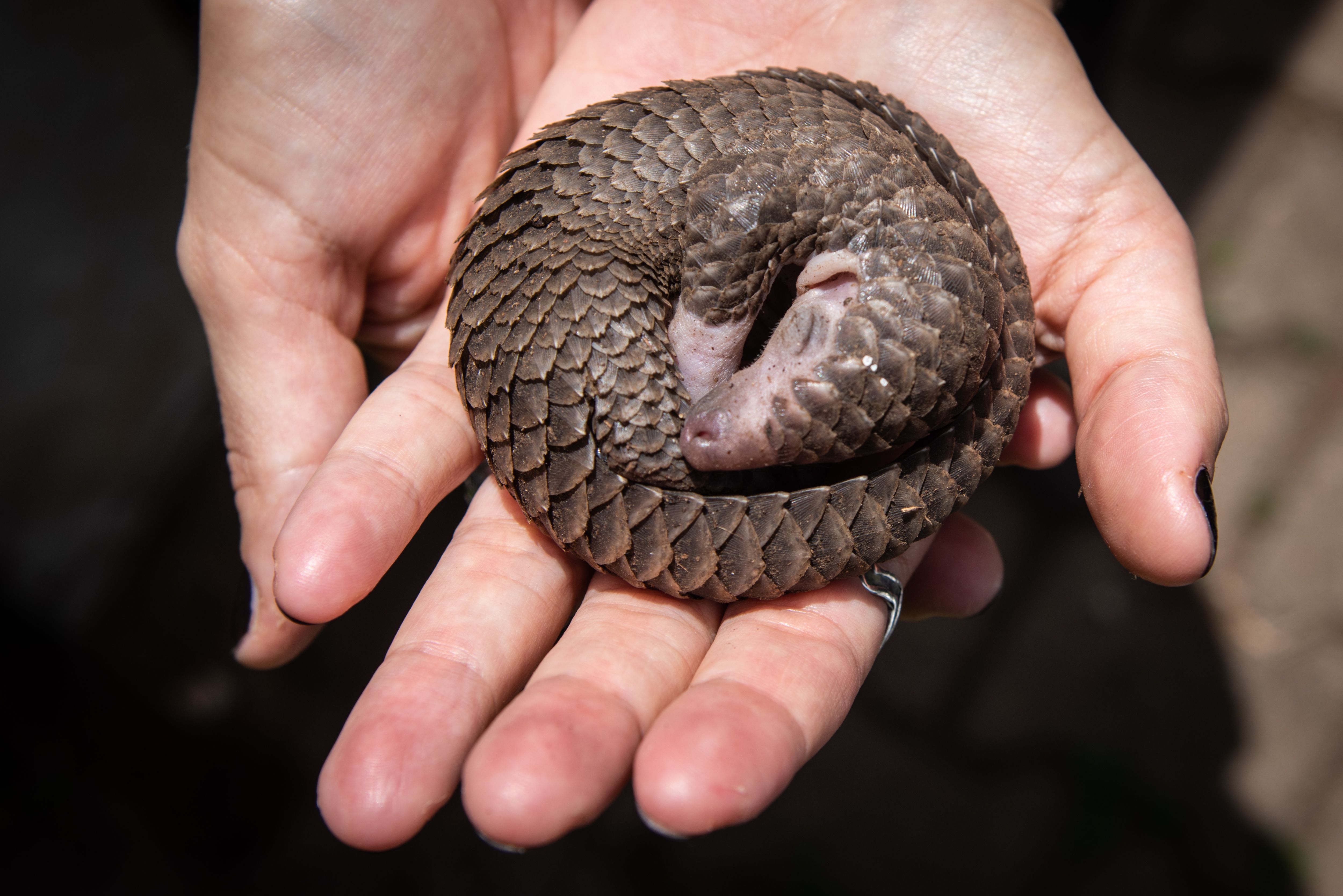
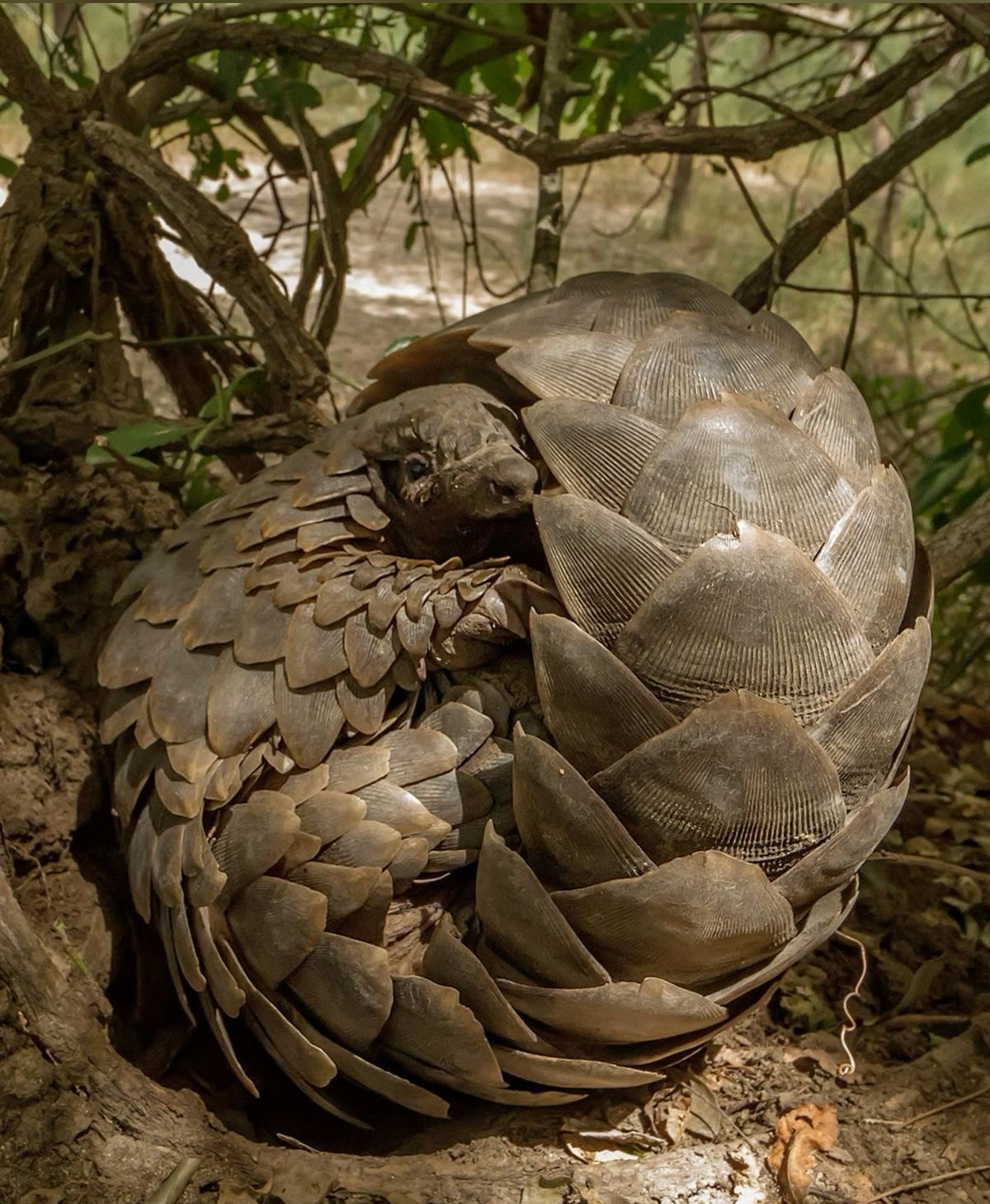
Pangolins are the only mammals on Earth covered in large, overlapping scales. Made of keratin, the same protein found in human hair and fingernails, the scales can account for around 20% of their body weight and form an extraordinary natural suit of armour. Depending on the species, pangolins range dramatically in size, from roughly the size of a house cat to that of a medium-sized dog. Despite their formidable appearance, they are generally docile, non-aggressive animals that rely on defence rather than confrontation. When threatened, a pangolin tucks its head beneath its body and curls into a tight ball, leaving almost nothing exposed except its hardened scales. Even powerful predators such as lions can struggle to pry one open. Pangolins can also release a foul-smelling secretion from glands near the tail as an additional defence.
Their bodies are remarkably specialized for feeding on ants and termites. Pangolins have no teeth, instead using powerful curved claws to tear open nests before collecting insects with an extremely long tongue coated in sticky saliva. In the giant pangolin, the tongue can reach approximately 70 cm (27.5 inches), approaching or even exceeding the head-and-body length of some individuals. Rather than ending at the back of the mouth like a human tongue, it extends deep through the body and is anchored around the lower chest and pelvic region. Because pangolins cannot chew, their prey is ground down inside a muscular, gizzard-like stomach with the help of swallowed sand and small stones.
Pangolins have relatively poor eyesight and rely heavily on an exceptional sense of smell to locate food and navigate their surroundings. Their ears and nostrils can close while they feed, helping prevent swarming ants and termites from entering. Most species are solitary and predominantly nocturnal, although the black-bellied pangolin is largely active during the day.
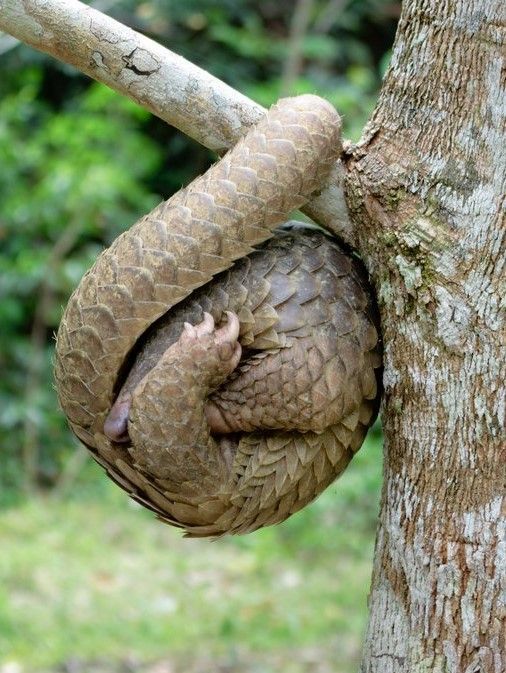
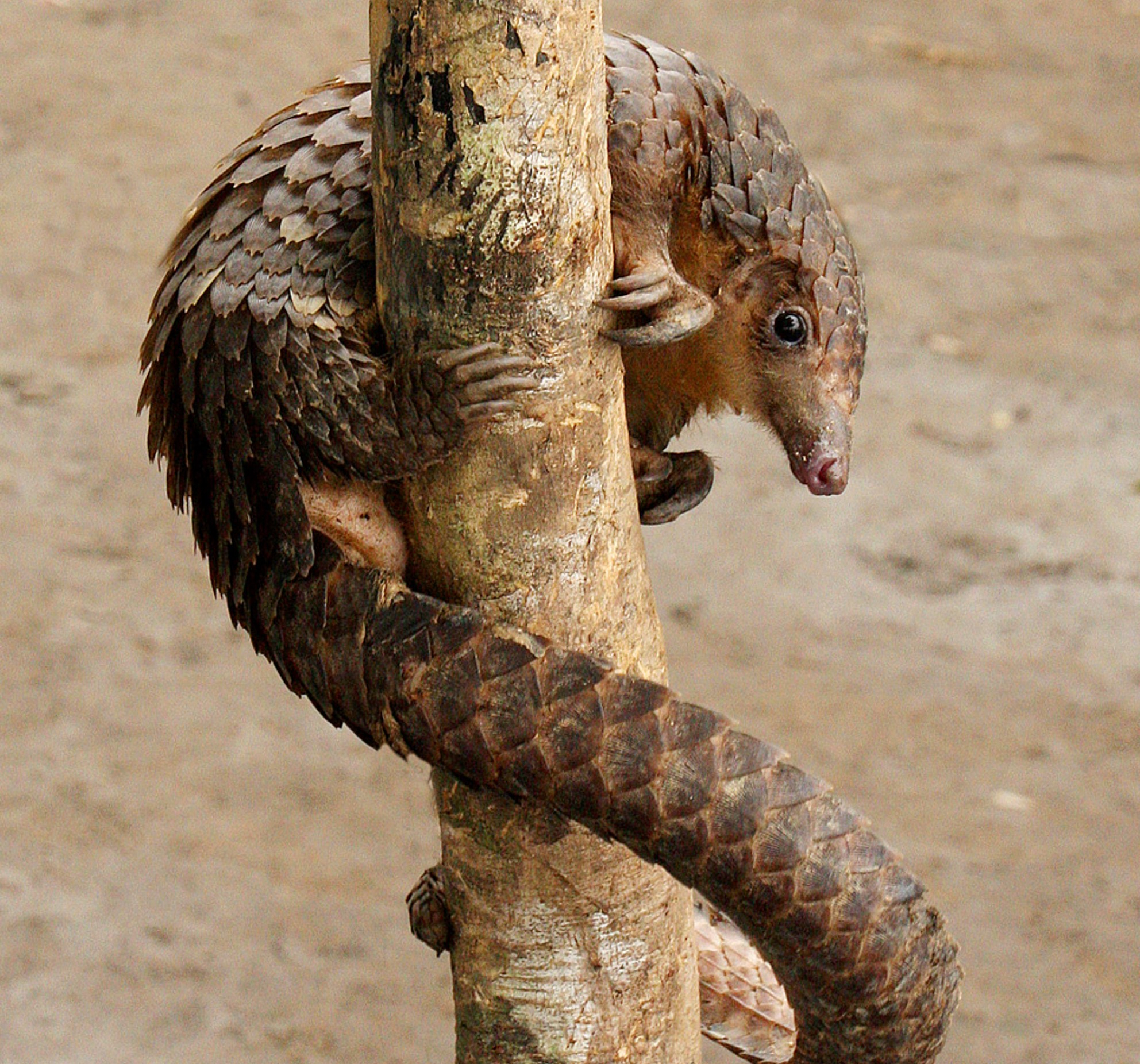
Some pangolins spend most of their lives on the ground and excavate deep burrows, while arboreal, or tree-dwelling, species are skilled climbers that use strong claws and long, prehensile tails to grip branches and move through the canopy. Despite these extraordinary adaptations, pangolins remain remarkably secretive animals, and much about their behaviour and lives in the wild is still being uncovered.


The Next Generation
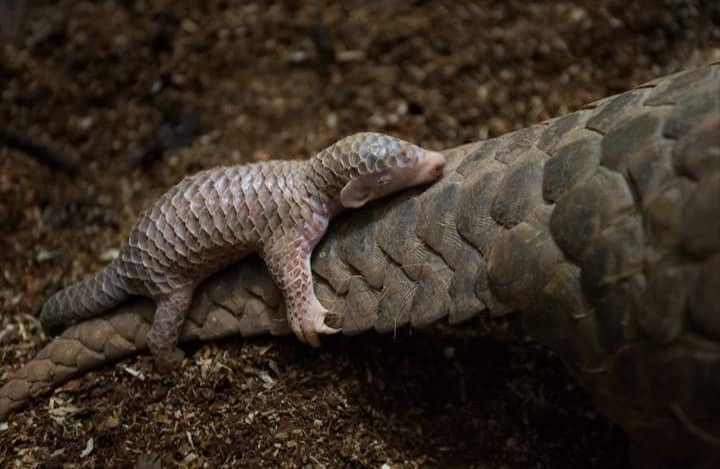
After a pregnancy lasting several months, a female pangolin usually gives birth to a single pup. Newborn pangolins are born with soft scales that begin hardening soon after birth, while the mother keeps the pup close and protected during its most vulnerable early weeks.
As the pup grows, it may ride on its mother’s back or near the base of her tail while she moves through the landscape searching for food. Young pangolins gradually learn how to locate ant and termite nests, dig with their powerful claws, and use their long tongues to feed.
If danger approaches, the mother can curl around her pup, using her own armored body as a shield. The young pangolin remains dependent on her for several months before eventually becoming independent and beginning a solitary life of its own.

Where They Roam
Pangolins are found across Africa and Asia, with the eight surviving species divided evenly between the two continents. Their distribution is highly fragmented, and each species occupies a different range shaped by habitat, climate, and human pressure.
African pangolins occur across parts of West, Central, East, and southern Africa. White-bellied and black-bellied pangolins are primarily associated with tropical forests, giant pangolins inhabit forest and forest–savanna landscapes, and Temminck’s ground pangolins range through drier savannas, woodlands, and grasslands across eastern and southern Africa.
Asian pangolins survive in scattered populations across South, Southeast, and East Asia. Indian pangolins occur mainly across the Indian subcontinent, while Chinese, Sunda, and Philippine pangolins inhabit increasingly fragmented forest landscapes across parts of China, mainland Southeast Asia, the Malay region, and the Philippines.

The Amazon is the largest tropical rainforest on Earth, spanning 6.7 million square kilometers across nine South American countries.


The African savanna in Tanzania
Why Pangolins Matter
Pangolins play an important role in the ecosystems they inhabit by consuming vast numbers of ants and termites, helping regulate insect populations that might otherwise become locally overabundant.
Their powerful digging also turns and aerates the soil, redistributes nutrients, and helps aerate and mix the soil, supporting nutrient cycling and soil health. By protecting pangolins, we also protect the forests, savannas, and grasslands that support countless other species.
Threats
Habitat Loss and Fragmentation
Deforestation, agriculture, roads, mining, and expanding settlements continue to destroy and divide pangolin habitat. Fragmentation isolates populations and reduces access to suitable feeding and shelter areas.
Low Reproductive Rate
Most pangolin species usually produce only one offspring at a time. Their slow reproductive rate makes it difficult for depleted populations to recover from sustained hunting, habitat loss, and trafficking.
Hunting and Bushmeat
Beyond international trafficking, pangolins are hunted locally for meat and traditional uses in parts of Africa and Asia. This pressure can be especially damaging where populations are already small or declining.
Illegal Wildlife Trade
Pangolins are heavily targeted for their scales and meat, making illegal trade the most severe threat facing the group. Trafficking affects both African and Asian species and has driven major declines across much of their range.

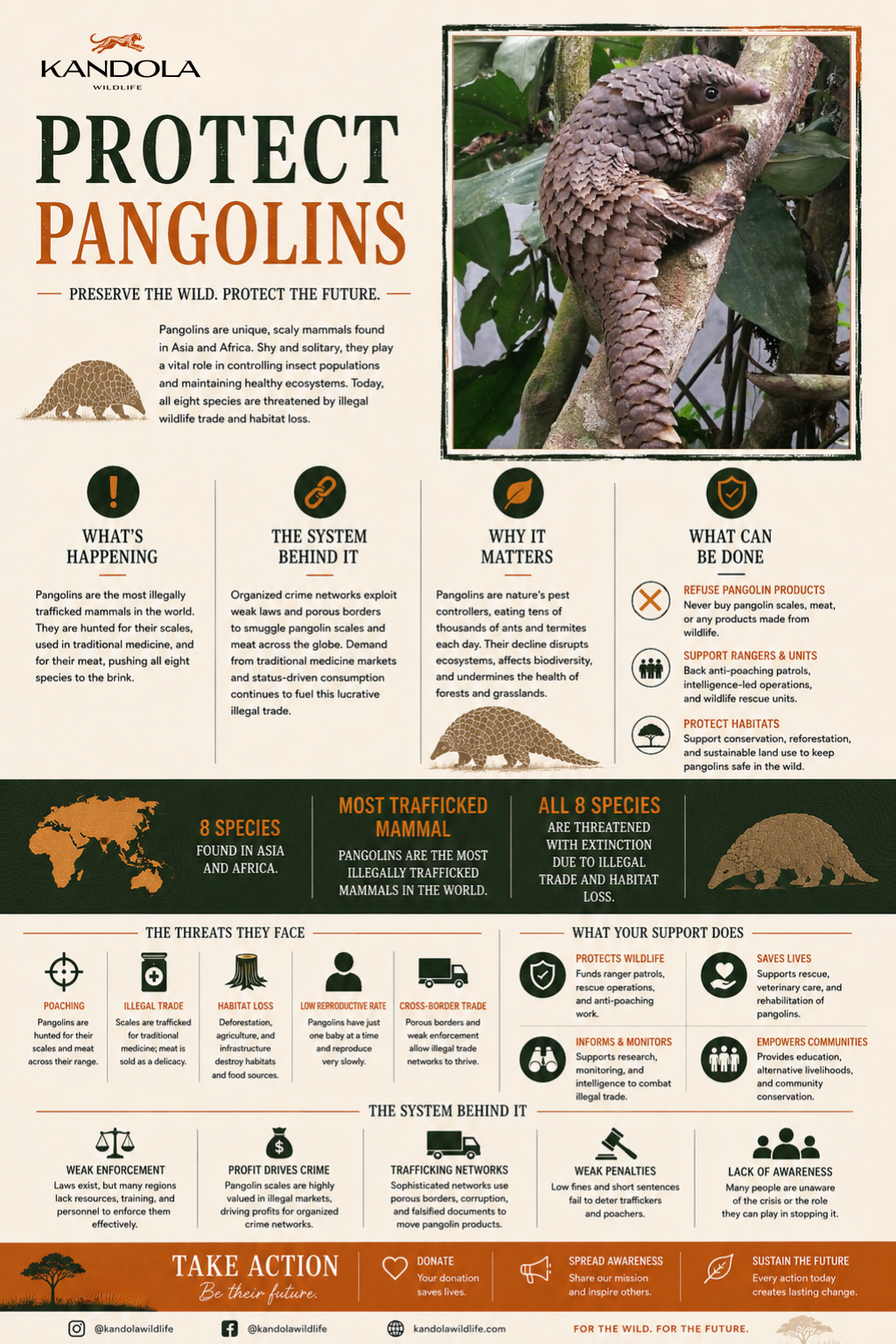
The Illegal Wildlife Trade
What’s Happening . . .
The System Behind It . . .
Pangolins are trafficked on an enormous scale for their scales and meat. Their keratin scales are used in traditional medicine, while pangolin meat is consumed locally and, in some markets, treated as a luxury product. Despite all eight species being listed under CITES Appendix I, which prohibits international commercial trade in wild pangolins, trafficking remains widespread. Between 2016 and 2024, seizures represented an estimated more than half a million pangolins across 75 countries and 178 trafficking routes.
The trade stretches from remote hunting grounds to international criminal supply chains. Pangolins and their scales move through collectors, middlemen, transport networks, ports, and cross-border trafficking routes before reaching consumer markets. As Asian pangolin populations declined, trafficking increasingly shifted toward African species, with large quantities of scales moving from Africa toward markets in Asia. Enforcement remains difficult because trafficking routes adapt quickly and seizures capture only a fraction of the true trade.
Why It Matters . . .
Pangolins reproduce slowly, with most species typically producing only one offspring at a time. Their populations therefore cannot withstand sustained removal on the scale created by commercial trafficking. All eight species are already threatened with extinction, and continued exploitation places additional pressure on populations whose true numbers remain poorly understood.
What Can Be Done . . .
Never buy pangolin products: Avoid meat, scales, traditional remedies, jewellery, or other products made from pangolins.
Support pangolin conservation: Support organizations such as the IUCN SSC Pangolin Specialist Group and the Pangolin Conservation and Research Foundation (PCRF), which work to strengthen research, protection, rehabilitation, and conservation efforts for pangolins.
Support stronger enforcement: Effective wildlife-crime investigations, customs screening, international cooperation, and enforcement of CITES protections are essential to disrupting trafficking networks and reducing illegal trade.
Every scale belongs to a pangolin.


.png)
Conservation Efforts
African Pangolin Working Group
The African Pangolin Working Group (APWG) rescues and rehabilitates pangolins recovered from illegal trade, supports their release back into the wild, conducts research, and trains conservation and law-enforcement professionals across Africa.
Pangolin Conservation and Research Foundation
Based in southern Africa, PCRF combines research, protection, rehabilitation, rewilding, community engagement, and education. Its work focuses on building the scientific knowledge needed to protect pangolins while returning rescued animals to secure wild landscapes.
Rescue, Rehabilitation and Rewilding
Pangolins confiscated from traffickers often require intensive veterinary care before they can return to the wild. Specialist teams rehabilitate surviving pangolins, identify suitable release sites, and monitor them after release to improve their chances of successfully returning to a natural life. APWG and PCRF both make this a major part of their conservation work.
IUCN Pangolin Conservation Planning
The IUCN SSC Pangolin Specialist Group coordinates global conservation science and strategy for all eight species, including Red List assessments, regional and national action plans, research priorities, and guidance for rescue and release.
Combating Illegal Trade
Protecting pangolins requires more than rescuing individual pangolins. Conservation groups work with customs officials, law enforcement, governments, and local communities to improve detection, strengthen investigations, disrupt trafficking networks, and reduce demand for pangolin products.