Lion
The pride of Africa's savannas.
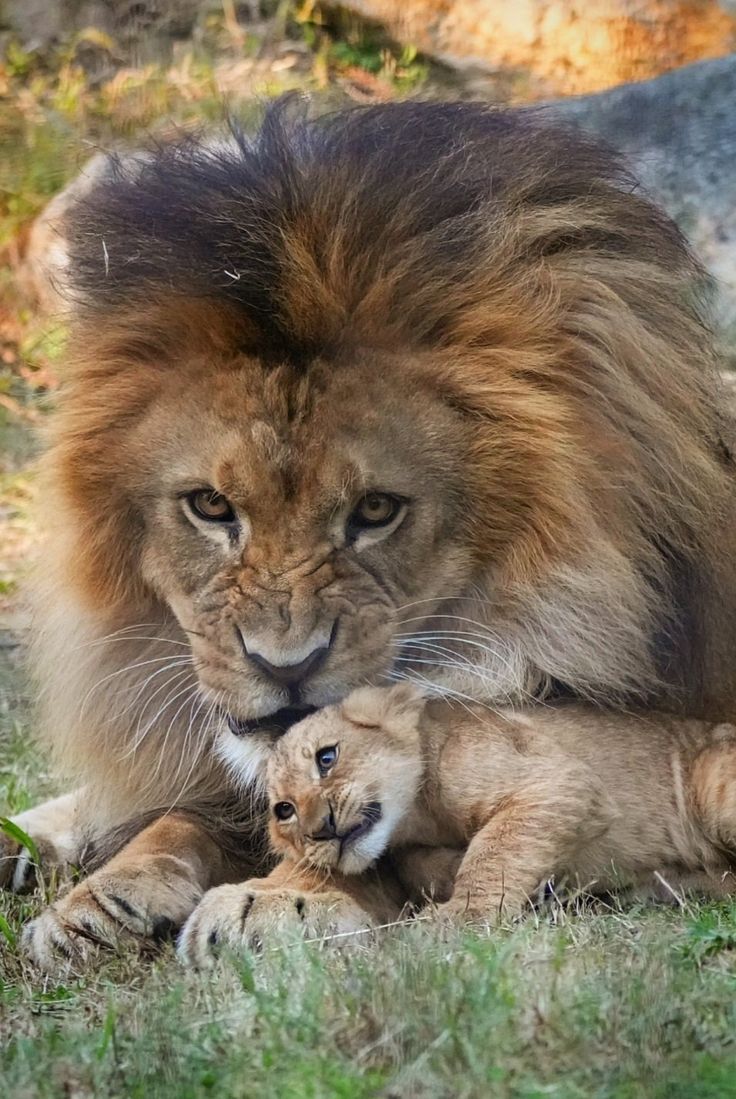
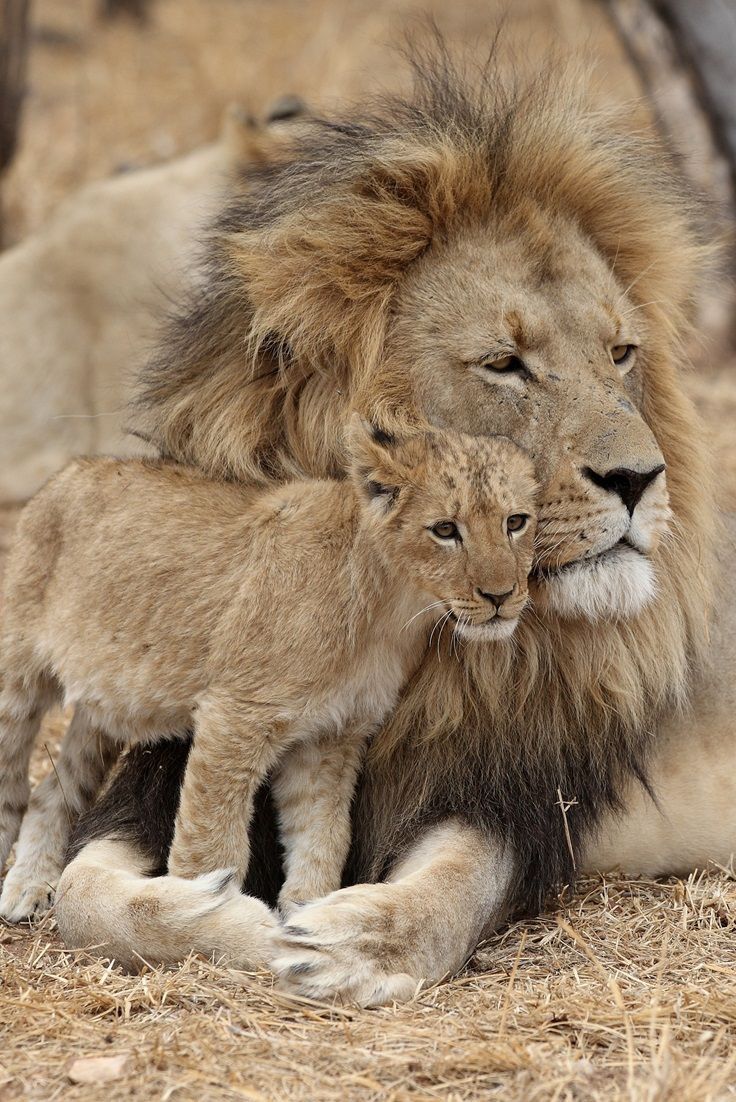
Powerful and majestic, the “king of the beasts” has no natural predators. Once among the world's most widespread large predators, lions ranged across much of Africa, Europe, the Middle East, and Asia. But as of 2025, they occupy just over 6 percent of their historic range. Around 24,000 lions are estimated to remain in the wild, a significant decline from around 200,000 a century ago.
Lions (Panthera leo) have roamed the Earth for approximately 1 to 2 million years, with the modern species emerging around 100,000 to 200,000 years ago.
Scientific Name: Panthera leo
Wild Population: Approximately 24,000
Current Population Trend: Decreasing
Historic Range Loss: 94%
Habitat: Savannas, grasslands, open woodland, and scrubland
Social Group: Pride
Lifespan: 10–14 years in the wild
Weight: Males 150 to 260 kg (330 to 570 lbs) Females 122 to 181 kg (270 to 400 lbs)
Top Speed: Up to 80 km/h (50 mph)
Roar Distance: Up to 8 km (5 miles)
Cubs Per Litter: Usually 2–4
Diet: Carnivore
Lions are listed as vulnerable on the IUCN Red List, which means they are at high risk of extinction in the wild.
Lions are listed as ‘Largely depleted’ on the IUCN Green Status, meaning their populations are much lower than they historically were and they are at a high risk of further declines without continued conservation efforts.
The two surviving lion subspecies are classified as vulnerable and endangered, with one population as critically endangered.
While multiple prehistoric and modern populations are extinct, the Cape lion was hunted to extinction in the mid-19th century.
_edited.jpg)

_edited.jpg)
About Lions
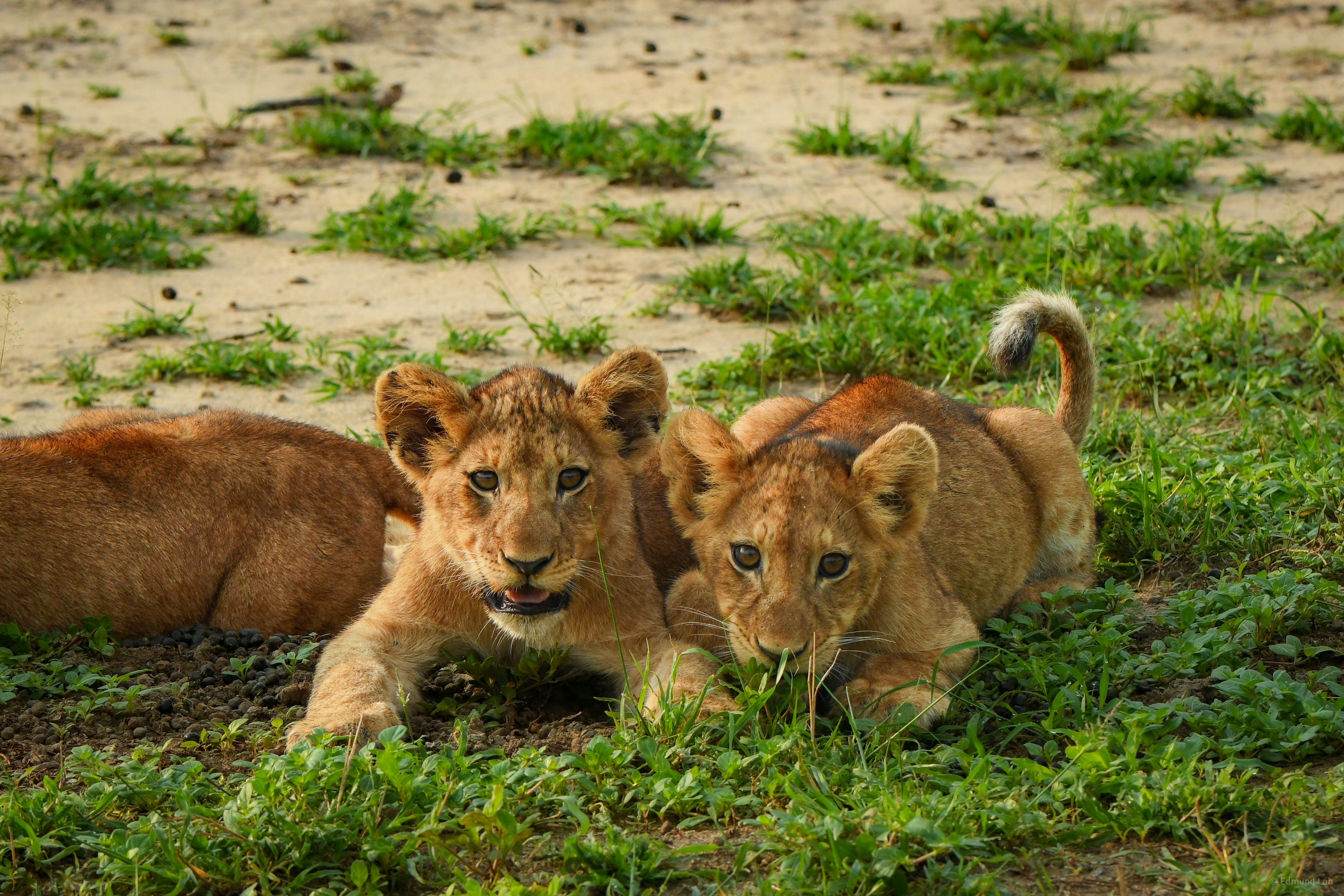
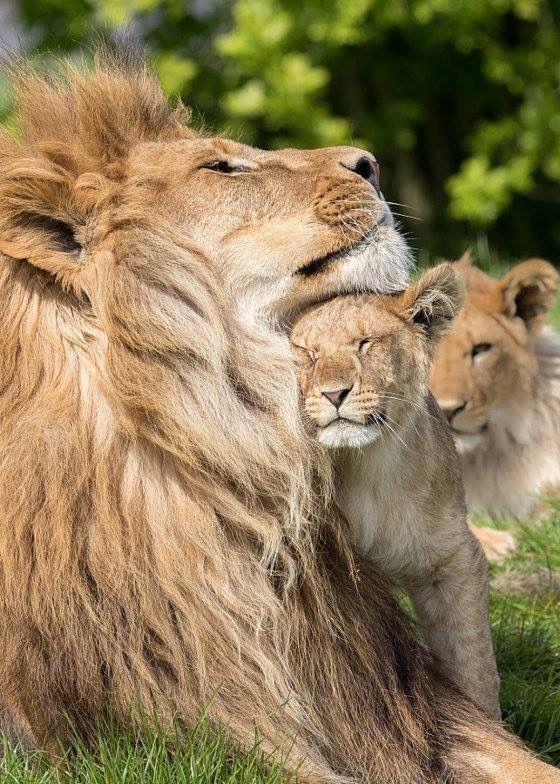
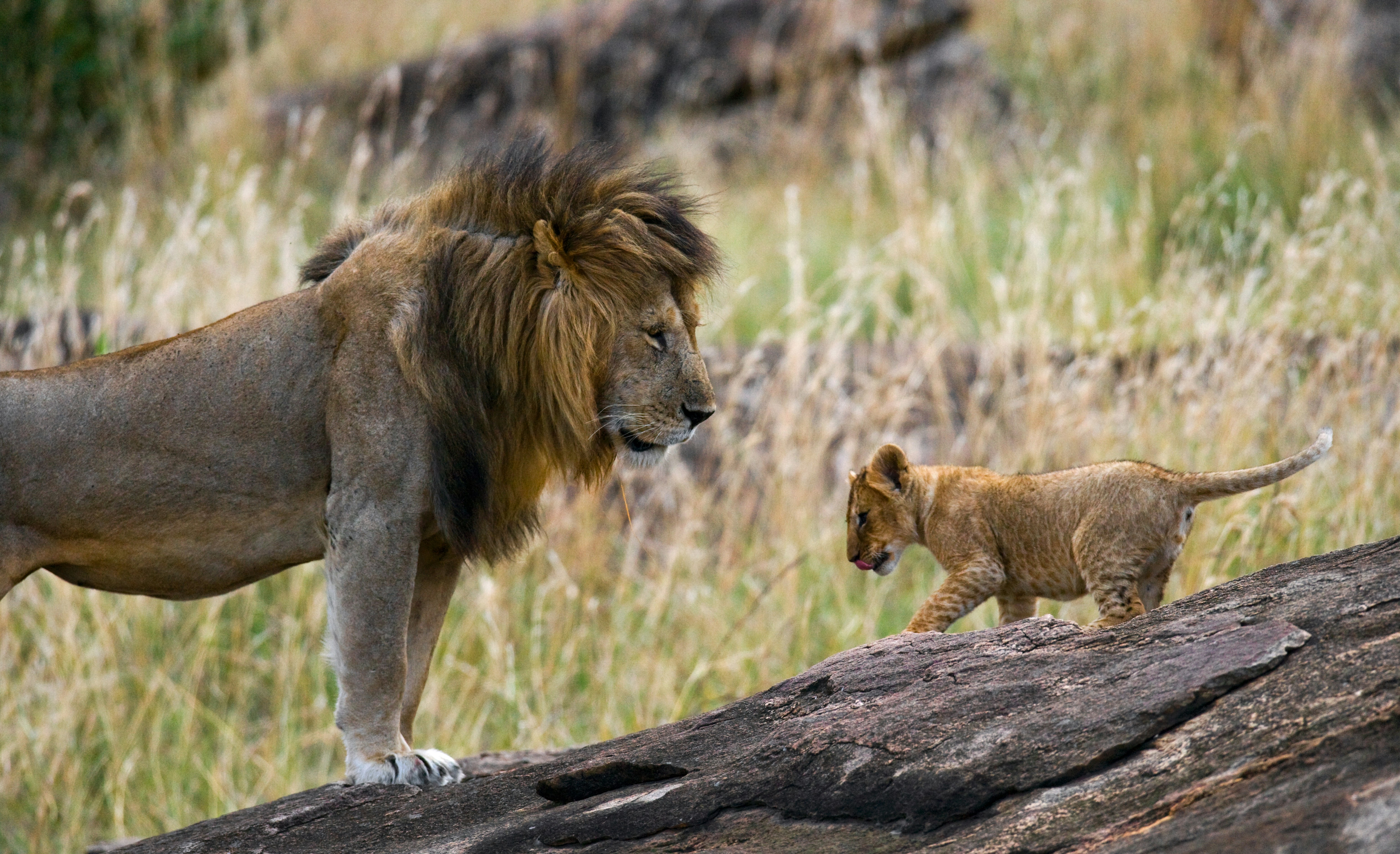
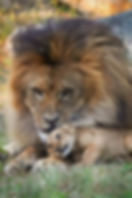
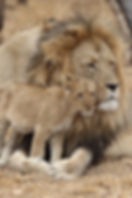
Throughout history, African lions have been admired as symbols of courage and strength. The largest African cats, they are second in size only to the tigers and the only truly social members of the cat family. Unlike other cats, lions live in groups known as prides — though there is one population of solitary lions. Prides consist of family units that can range from two to 40 lions, typically including three or four males, around a dozen females, and their young. All lionesses within a pride are related, and female cubs usually remain with the group as they mature.
Female lions form the stable core of the pride and often hunt cooperatively. They often work together to prey upon antelopes, zebras, wildebeest, and other large animals of the open grasslands. Many of these animals are faster than lions, so teamwork pays off. Female lions also collectively nurture their cubs, while males defend territory and protect the pride from rivals.

The Next Generation of the Pride
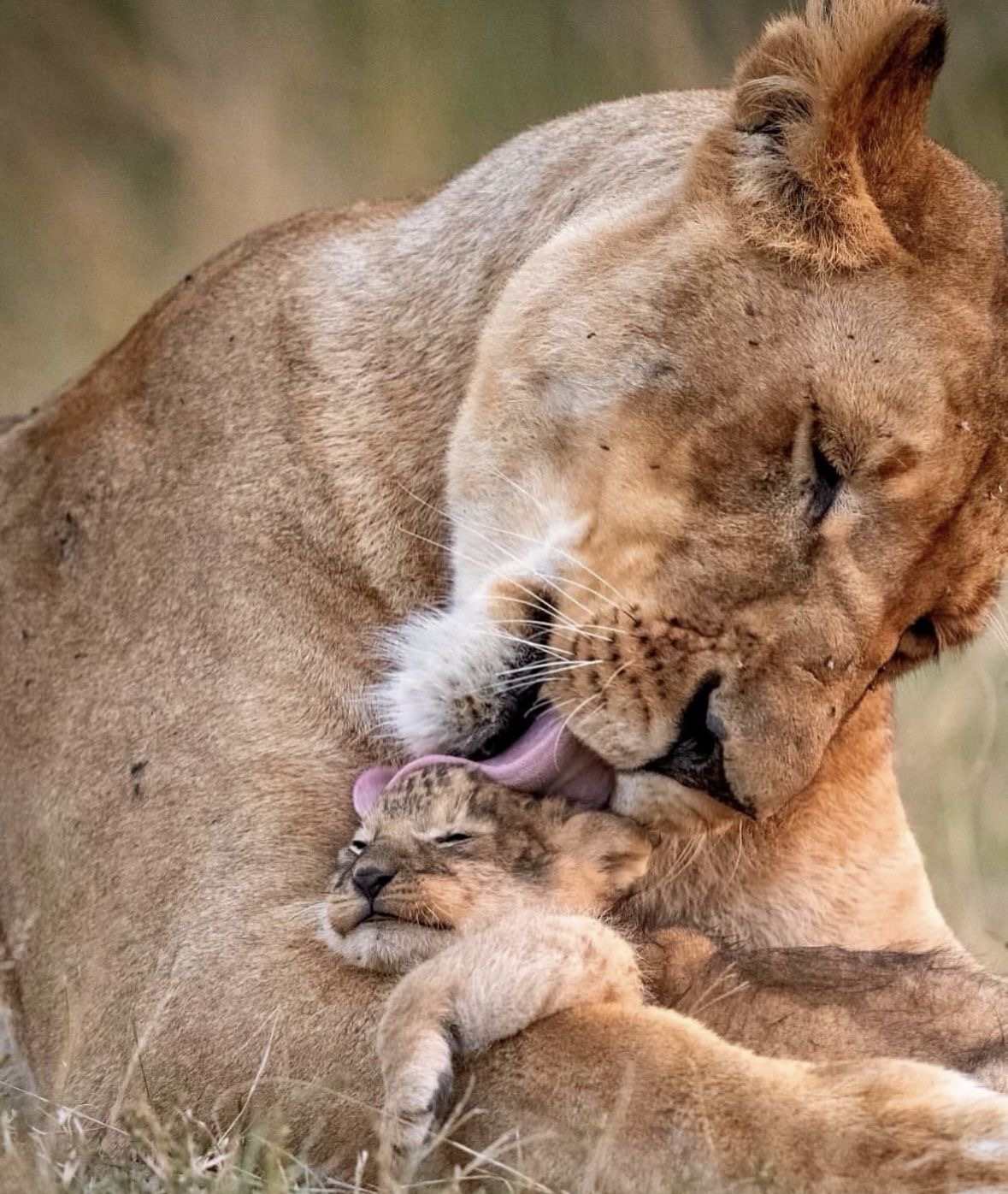
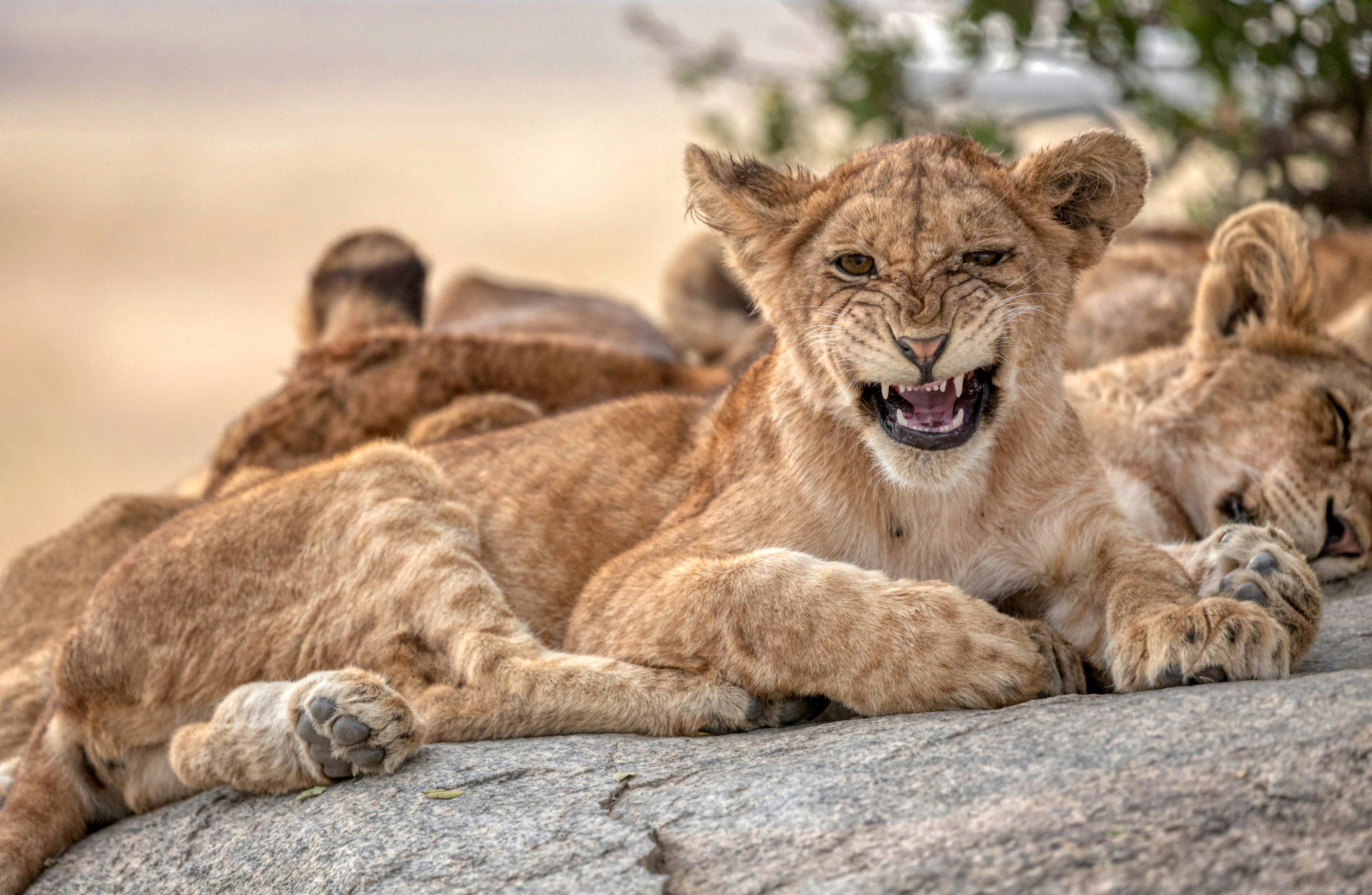
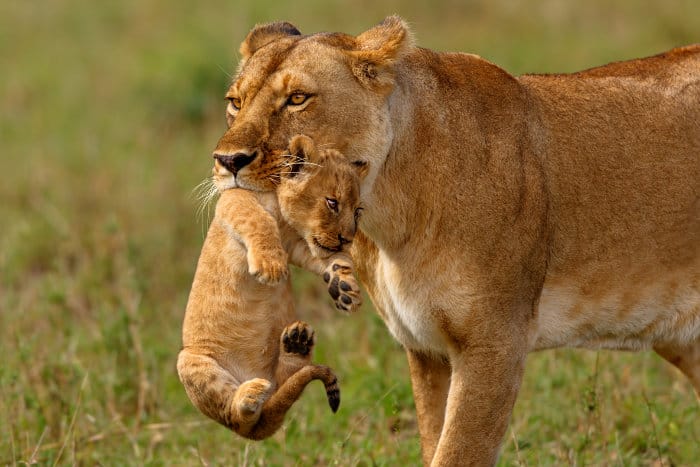
After a three-and-a-half-month pregnancy, a lioness sneaks away to a hidden den to give birth to a litter of one to four helpless cubs. Because the cubs are born blind, the lioness keeps them hidden for the first month, safely carrying them in her mouth whenever she needs to move to a new hiding spot. Once the cubs can walk, she brings them back to the pride. Lionesses who give birth at the same time form a shared nursery, working together to hunt, protect, and nurse any cub in the group. Infanticide is a common problem for cubs, the main predators they are exposed to include hyenas, leopards, and other lions. Even though the cubs practice hunting by playing with each other, they cannot hunt successfully on their own and rely entirely on the pride's food until they are about two years old.

Where They Roam
Wild lions survive primarily in eastern and southern Africa, with smaller populations in western and central Africa. Beyond Africa, the Asiatic lion survives only in India, where an isolated population remains in Gujarat’s Gir landscape and surrounding areas.
.png)
The Amazon is the largest tropical rainforest on Earth, spanning 6.7 million square kilometers across nine South American countries.


Why Lions Matter
Lions are essential keystone species and apex predators that uphold the natural balance. As the leading carnivores in the savanna, they regulate herbivore populations, such as zebras and wildebeests, which helps prevent overgrazing and preserves the overall health and genetic diversity of the ecosystem.
Threats
Habitat Loss
Habitat fragmentation causes lion populations to become isolated into smaller, disconnected groups. This restriction on their territory diminishes genetic diversity, making these populations more susceptible to diseases and inbreeding. Across much of their range, lions are increasingly confined to protected areas and fragmented populations, with some of the most severe declines occurring in West and Central Africa.
Human-Lion Conflict
As human populations grow and agriculture expands, lions are increasingly living nearer to humans settlements. When their natural prey becomes limited, lions may turn to livestock for food. This leads to considerable financial strain for local farmers, often resulting in the preemptive or retaliatory killing of lions, which can include poisoning.
Declining Prey Populations
Lions depend on food sources like antelopes and zebras, which are experiencing significant declines. The illegal poaching associated with the commercial bushmeat trade severely reduces the wild prey that lions rely on.
Snares set for bushmeat also kill lions directly. Lions can become trapped while pursuing prey or scavenging, suffering severe injuries or death even inside protected areas.
Illegal Wildlife Trade
Lions are increasingly targeted for bones, claws, teeth, and skins sold into illegal wildlife markets. Lion bones are especially in demand as a replacement for tiger bones in traditional Asian medicine.

The Illegal Wildlife Trade
What’s Happening . . .
The System Behind It . . .
Lions are intensively bred in commercial captivity. This cycle exploits them at every stage of life. It spans from interactive cub-petting selfies, to "walking with lions" attractions, and finally to canned trophy hunts or slaughter for the international bone trade.
Cubs are taken from their mothers at a very young age so the females can be bred again, perpetuating a relentless cycle of commercial breeding. Facilities market these cubs as "rescued orphans" to paying volunteers. Once the lions grow too old for petting, they are funnelled into fenced "canned" hunts. There, they are shot by hunters who keep the skins and heads. Lion bones and skeletons have also entered international trade, including markets in Asia. This bone trade serves as a lucrative substitute for endangered tiger parts in traditional medicine.
Why It Matters . . .
This industrial exploitation offers zero conservation value. Hand-reared lions cannot be released back into the wild. Hand-reared lions are "human-imprinted"—meaning they lose their natural fear of humans and never learn the essential survival and hunting skills required to fend for themselves. The illegal captive trade creates a network that fuels black-market demand.
What Can Be Done . . .
Refuse wildlife selfies: Decline any interactive lion encounters. You can review the ethical travel guidelines provided by World Animal Protection.
Watch and share exposes: Educate others by sharing investigative documentaries. Free streams are hosted by Humane World for Animals.
Support policy campaigns: Back campaigns pushing governments to close captive loopholes. Explore the "Raise the Red Flag" initiative run by the Born Free Foundation.
Big cats are being exploited in silence.


.png)

Conservation Efforts
Serengeti-Mara Ecosystem
Supports one of the largest lion populations, sustained by the Great Migration.
The Serengeti–Mara ecosystem spans northern Tanzania and southwestern Kenya, connecting the Serengeti National Park with the Maasai Mara National Reserve and surrounding conservation areas. The 1.5 million wildebeest, zebras, and gazelles moving through this ecosystem provide an abundant, cyclic prey base.
Greater Kruger Ecosystem
Protects one of Africa’s largest connected populations via Kruger, Sabi Sand, Timbavati, and Klaserie.
Historically, fences isolated these private reserves from the main park. Between 1993 and 2010, the fence lines between Kruger and adjacent reserves (like Sabi Sand, Timbavati, and Klaserie) were systematically dropped. This created over 20,000 square kilometres of uninterrupted habitat.
Ruaha-Rungwa Landscape
This southern Tanzanian landscape supports more than 10% of the world’s remaining wild lions.
Ruaha–Rungwa is one of the most important remaining strongholds for the species. Its vast, relatively unfragmented wilderness provides critical habitat for lions at a time when many populations across East Africa continue to face pressure from habitat loss, prey decline, and human-wildlife conflict.
Kavango-Zambezi Transfrontier Conservation Area (KAZA)
Spanning Angola, Botswana, Namibia, Zambia, and Zimbabwe, KAZA is the world’s largest land-based transfrontier conservation area.
By linking national parks, wildlife management areas, communal lands, and other protected landscapes across international borders, KAZA helps maintain large wildlife corridors that are vital for the movement, connectivity, and long-term genetic health of lions and other wide-ranging species.
Community Conservation
Predator-proof enclosures, compensation, and conservancies effectively reduce human-lion conflict.
These measures represent some of the most effective tools in modern lion conservation. In Botswana’s Boteti region, fortified bomas or kraals using chain-link mesh and sturdy poles have proven 100% effective at stopping night-time livestock losses to lions. When combined with financial compensation for lost cattle, they can reduce the incentive for poisoning and retaliatory spear hunts while protecting local livelihoods.