Giraffe
Standing tall in a disappearing world.
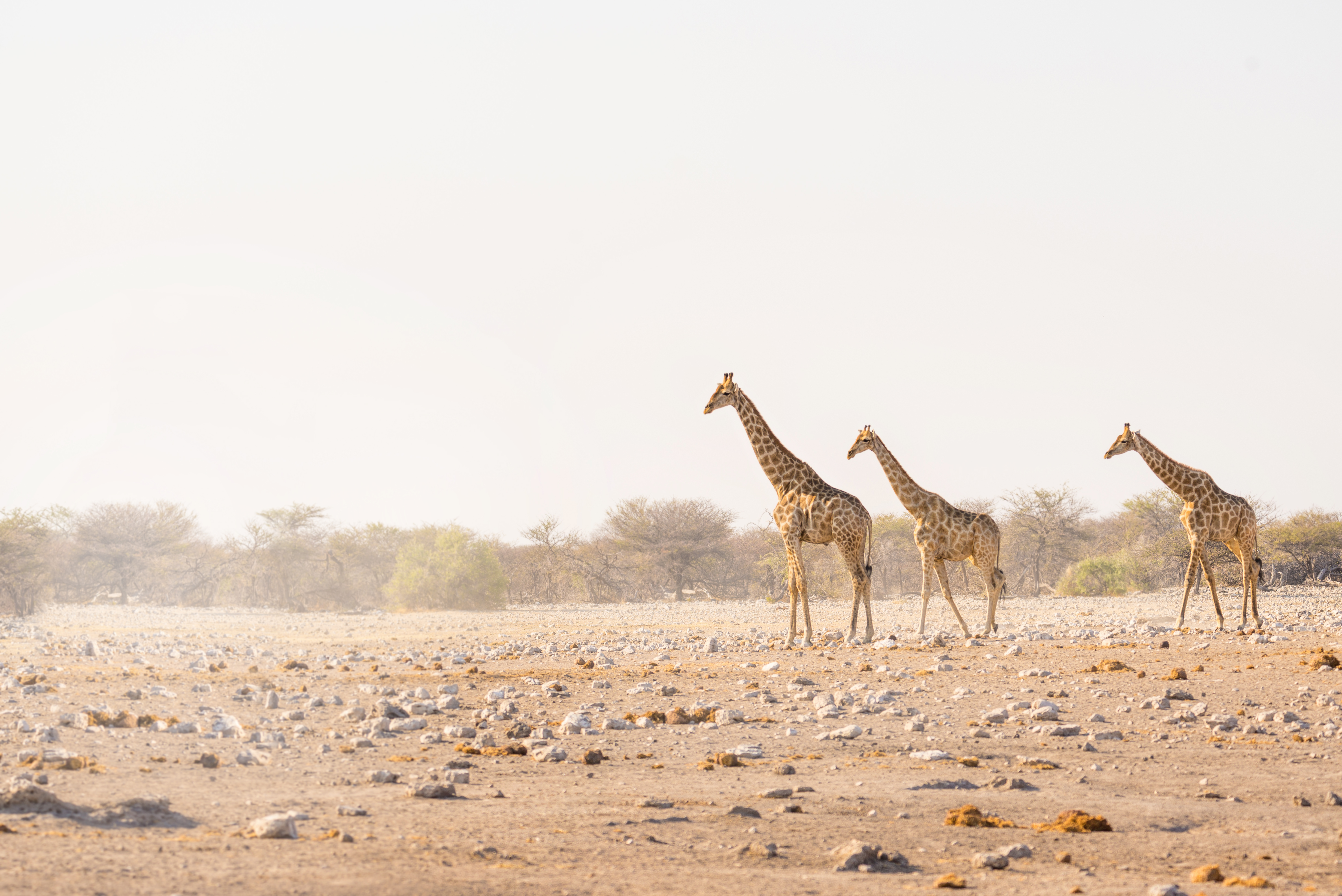
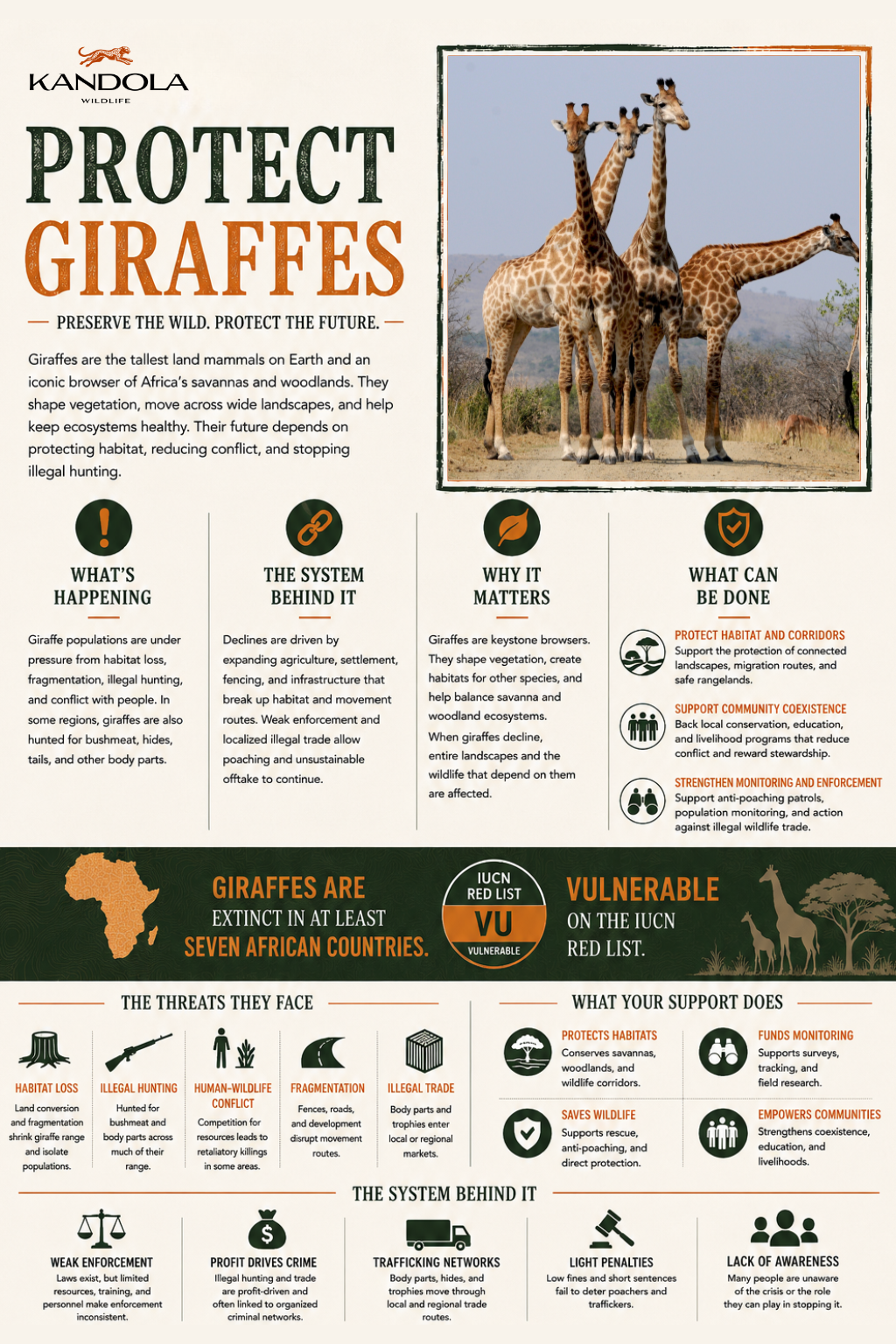
The tallest land mammals on Earth, giraffes are among Africa’s most recognizable and iconic species. Their extraordinary height, elongated necks, and distinctive patterned coats allow them to thrive across savannas, woodlands, and open forests where they browse vegetation beyond the reach of most other herbivores. Yet behind their familiar appearance lies a conservation story that has often gone unnoticed. Giraffes have lost almost 90% of their historical range in Africa over the last 300 years and have already disappeared entirely from at least seven African countries.
Giraffids have existed for roughly 20 million years, while the lineage that gave rise to modern giraffes emerged around 6 million years ago. Modern giraffes as we recognize them today appeared approximately 1 million years ago.

Scientific Name: Genus Giraffa
Wild Population: Approximately 140,000
Current Population Trend: Decreasing
Historic Range Loss: Nearly 90%
Habitat: Savannas, grasslands, open woodlands, and scrublands
Social Group: Tower
Lifespan: 20–25 years in the wild
Weight: Males 800 to 1,200 kg (1,760 to 2,645 lbs)
Females 550 to 830 kg (1,210 to 1,830 lbs)
Height: Males up to 5.5 m (18 ft)
Females up to 4.5 m (14.8 ft)
Diet: Herbivore
Giraffes are currently listed as Vulnerable on the IUCN Red List.
In 2025, the IUCN formally recognized four distinct giraffe species, replacing the previous classification of one species with multiple subspecies.
_edited.jpg)
_edited.jpg)
_edited.jpg)

_edited.jpg)
_edited.jpg)
About Giraffes
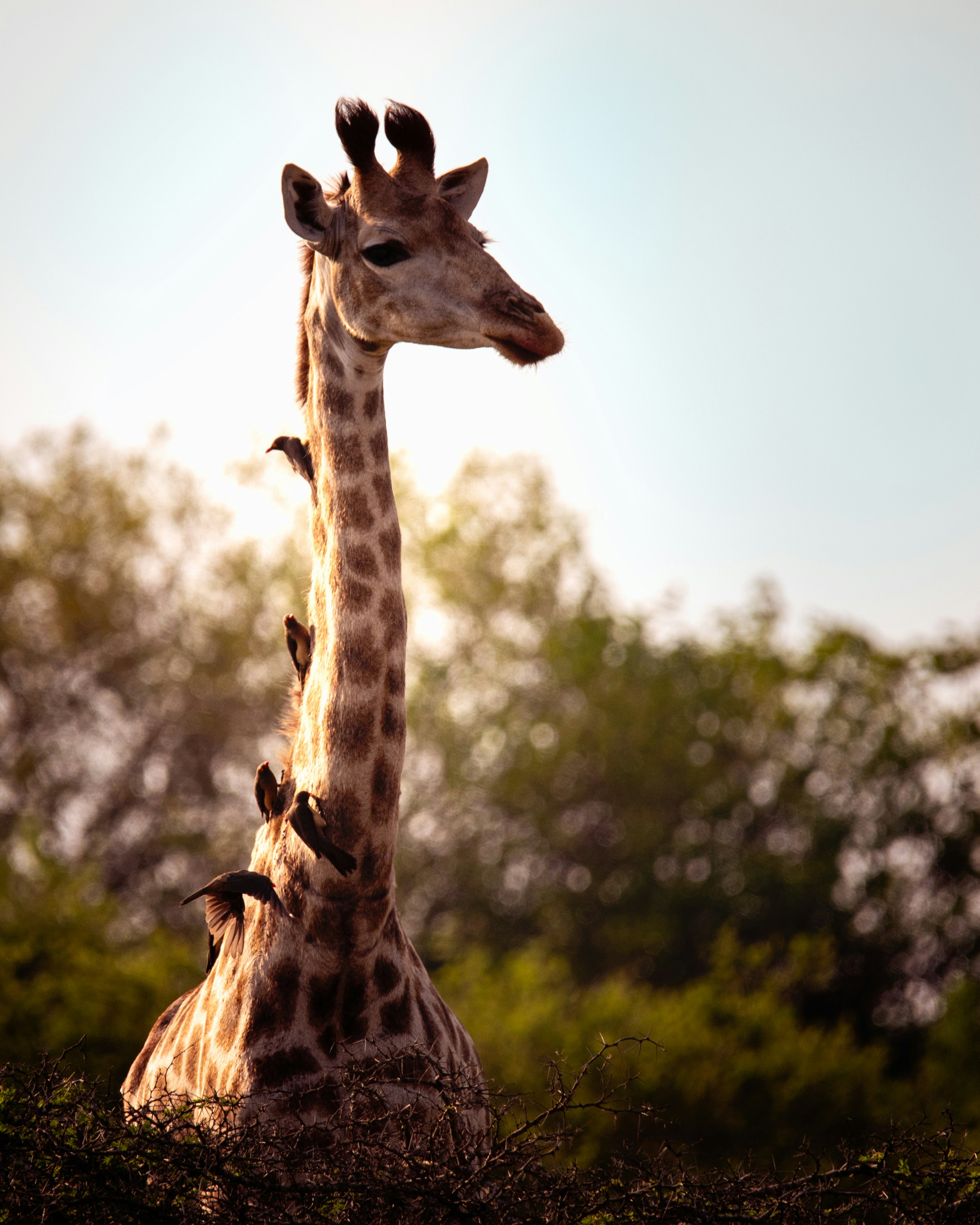
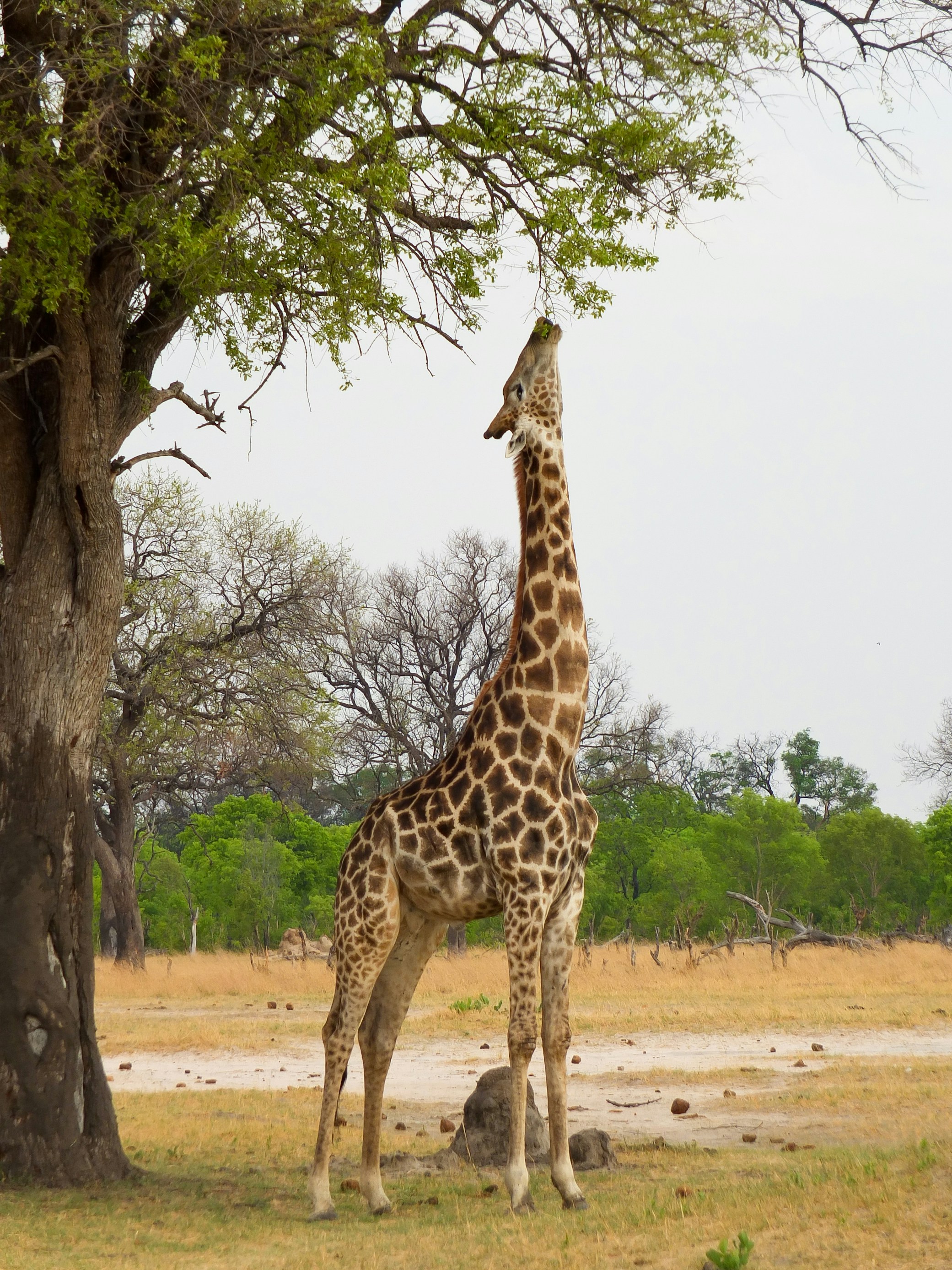
Giraffes are highly specialized browsers, feeding mainly on leaves, buds, flowers, and shoots from trees and shrubs. Their height gives them access to vegetation beyond the reach of most other herbivores, while their long, prehensile tongues and tough lips help them strip foliage from thorny branches. Despite their extraordinary neck length, giraffes have only seven neck vertebrae, the same number as humans.
Their circulatory system is built to cope with extreme height. A powerful heart pumps blood several metres upward to the brain, while specialized blood vessels and pressure-regulating mechanisms help prevent sudden changes in blood flow when a giraffe lowers its head to drink and raises it again.
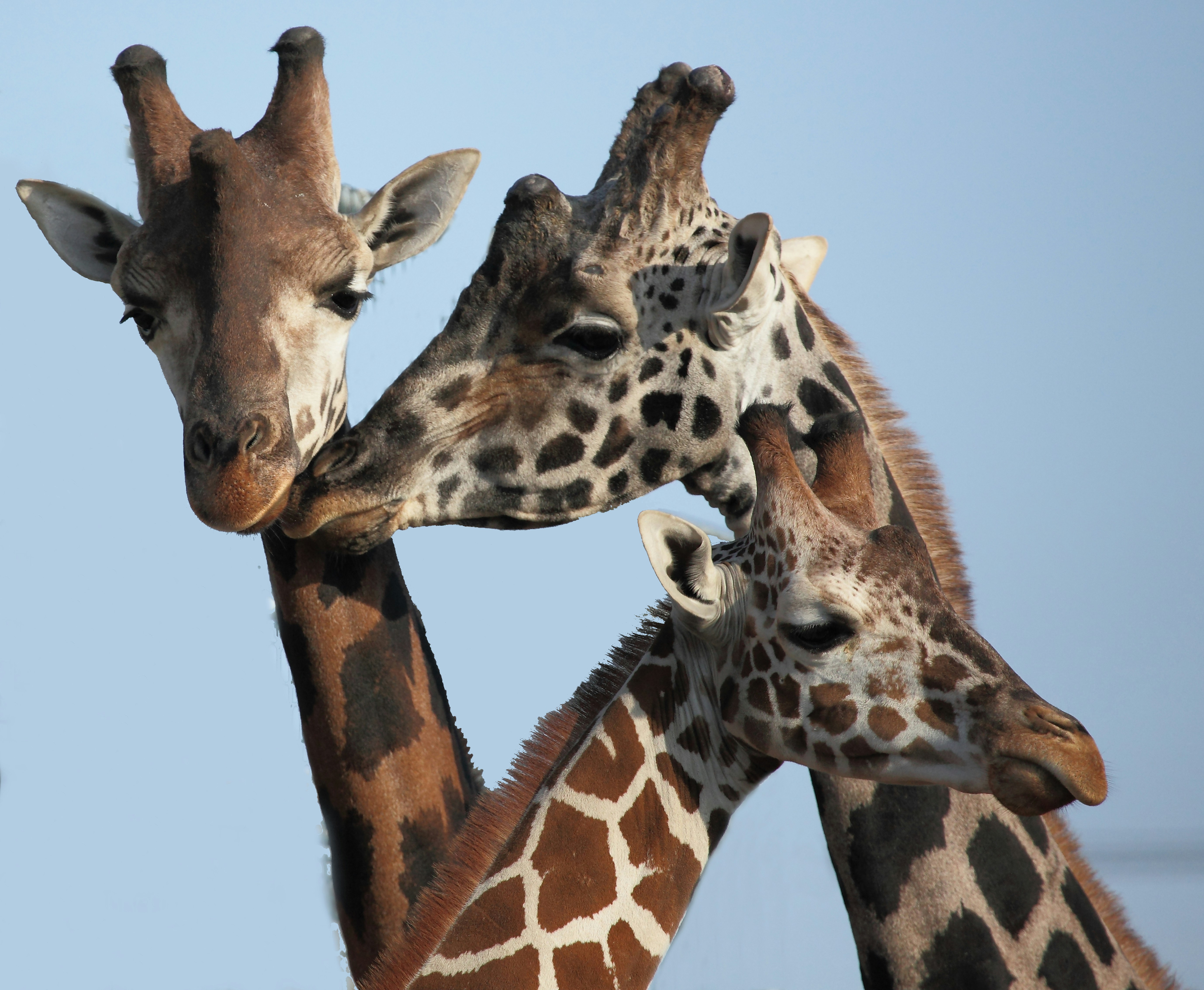
Giraffes are social animals, but they do not live in rigid herds. Instead, they form flexible groups that continually change in size and membership. Females are often seen with other females and calves, while adult males may travel alone or move between groups. Males establish dominance through necking, swinging their long necks and using their heads and ossicones, the skin-covered bony structures on top of a giraffe’s head, as powerful weapons during contests.
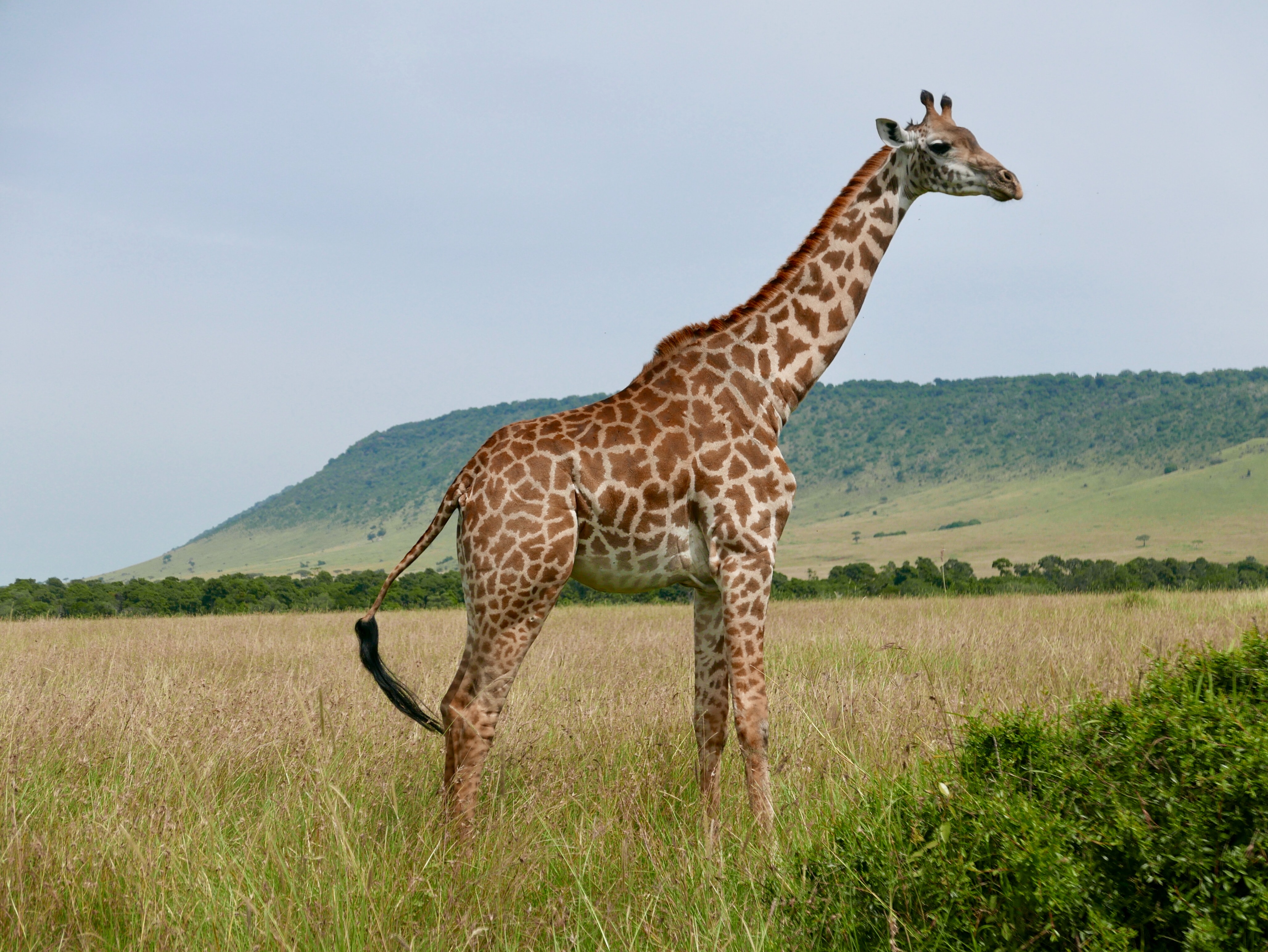
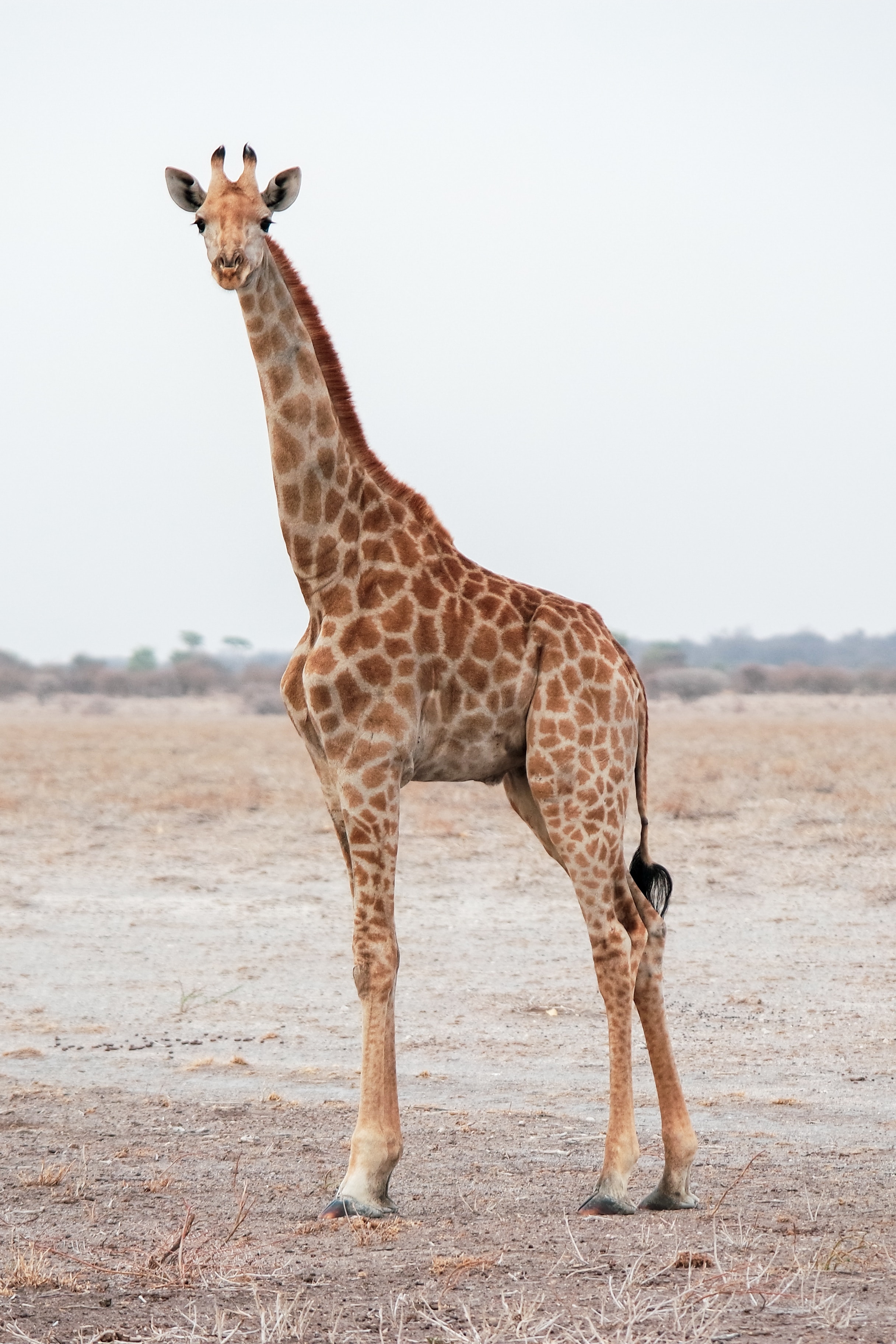
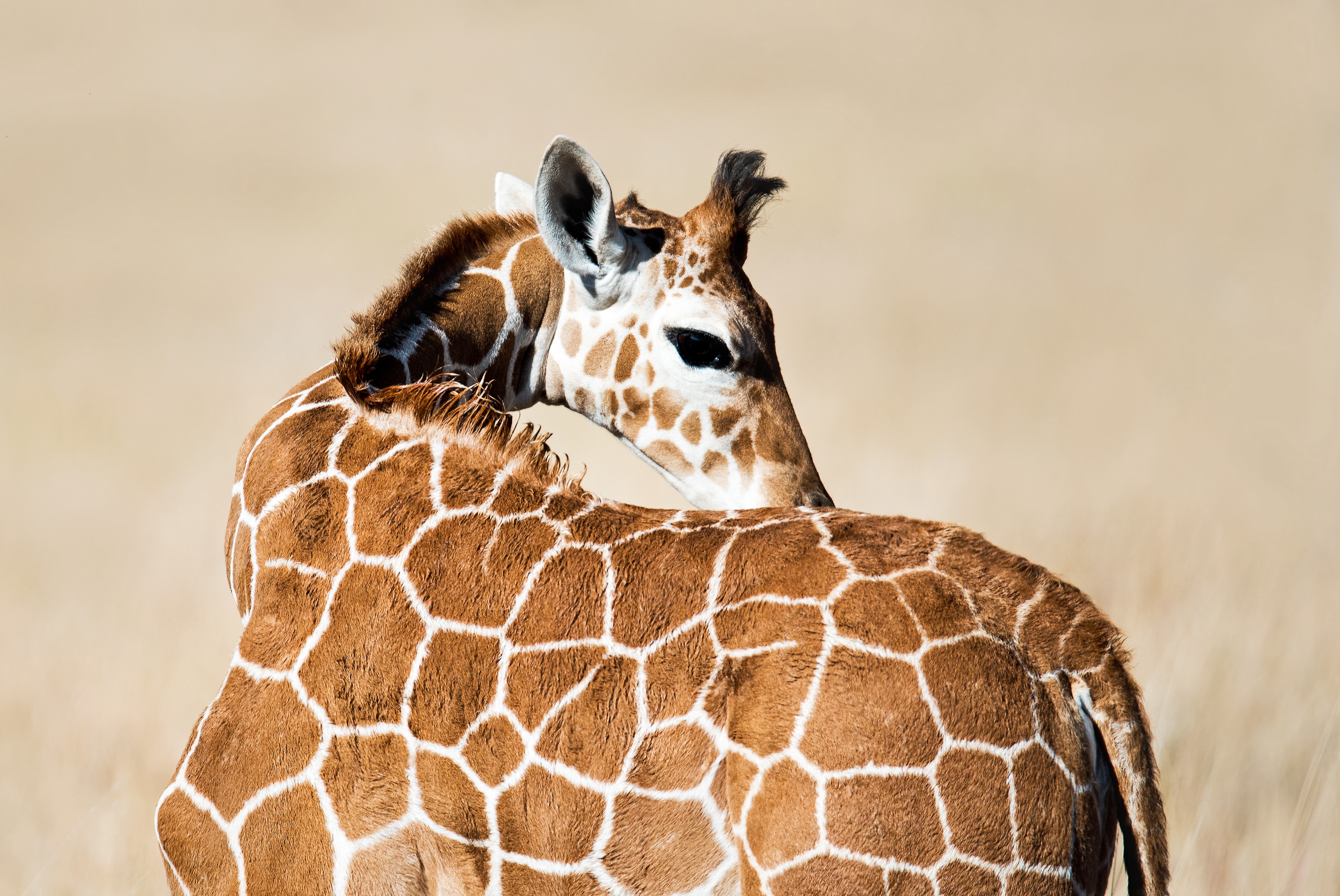
Each giraffe has a unique coat pattern, allowing researchers to identify individuals from photographs. Their markings also vary between species and populations. Giraffes spend much of the day feeding and relatively little time sleeping, often resting for only short periods while remaining alert to predators.
Despite their size, giraffes can move with surprising speed and agility. Adults rely heavily on their height, vision, and powerful kicks for defence, while calves are more vulnerable to lions, hyenas, leopards, and other predators.


The Next Generation of the Tower
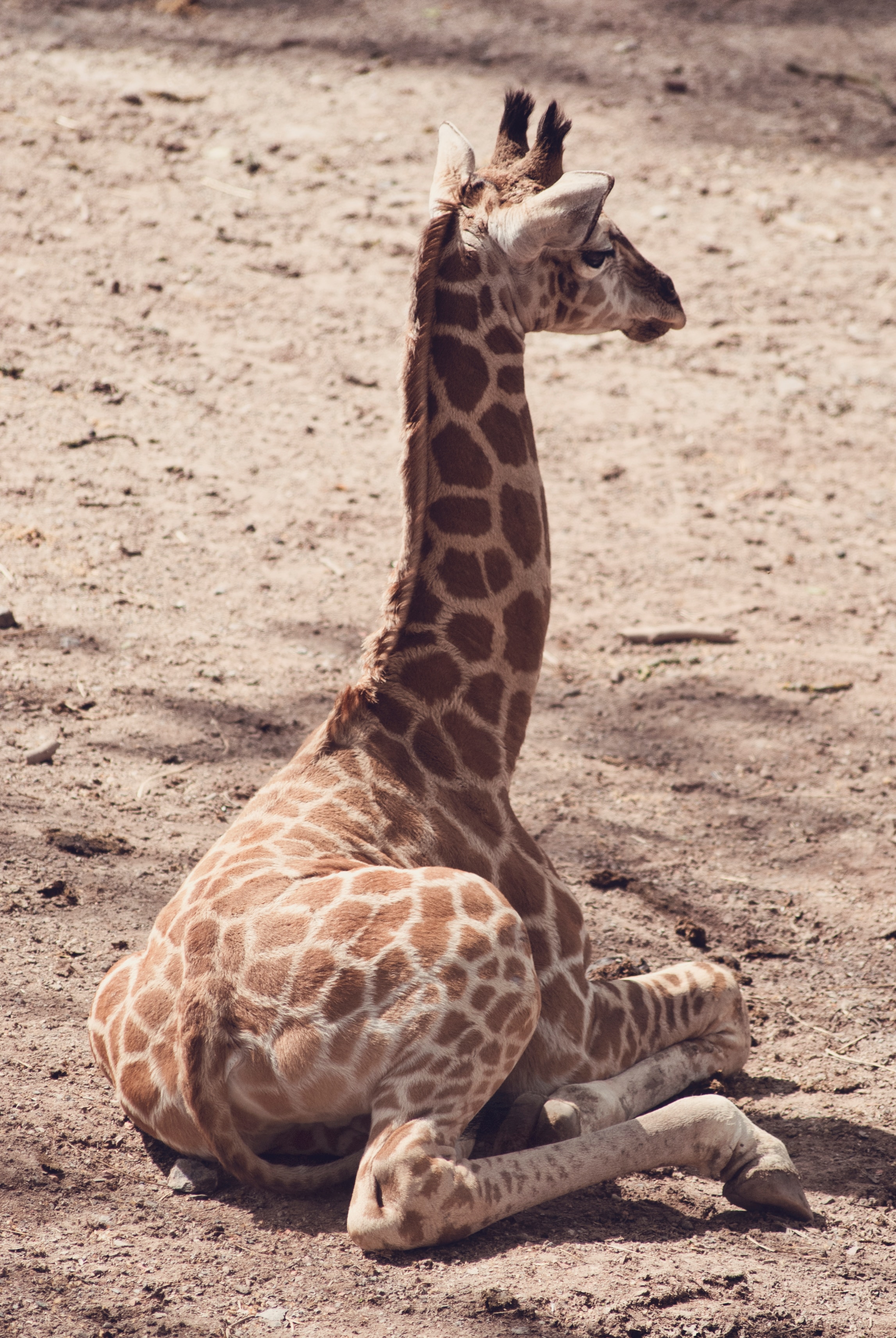
After a pregnancy lasting around 15 months, a giraffe mother usually gives birth to a single calf while standing. The newborn drops roughly 6 feet to the ground, yet within about an hour it can stand and begin nursing. Calves remain close to their mothers during their first months and may gather with other young giraffes in temporary nursery groups while females feed nearby. They gradually learn where to browse, drink, rest, and move safely through the landscape by following experienced adults. Young giraffes grow quickly, gaining height and strength throughout their first year. As they mature, females often remain within familiar social networks, while males become increasingly independent and eventually begin competing with other males for dominance.

Did you know?
A Purple Tongue Built for Thorns.
A giraffe’s prehensile tongue can reach around 45–50 cm (18–20 in) and is dark blue-purple in colour. Its tough tongue and lips help it strip leaves from thorny branches.
Dinner-Plate Feet.
A giraffe’s feet can measure around 12 inches across, roughly the size of a dinner plate.
Almost No Sleep.
Wild giraffes can sleep for as little as around 30 minutes a day, often resting in very short bursts while remaining alert to predators.
Those Aren’t Horns.
The structures on top of a giraffe’s head are called ossicones. Unlike true horns or antlers, they begin as cartilage, later fuse to the skull, and remain covered in skin and fur.
Built to Go Without Water.
Giraffes may drink only once every few days because they obtain much of the moisture they need from the vegetation they eat.
.png)

Where They Roam
Giraffes once ranged across far more of Africa than they do today. Their remaining populations are now increasingly fragmented across East, Central, southern, and parts of West Africa, with each of the four recognized species occupying a distinct geographic range.
Africa is home to four recognized species of giraffe:
-
Northern Giraffe (Giraffa camelopardalis)
The most widely dispersed of the four species, northern giraffes survive in scattered populations across parts of Central and East Africa. This species includes some of the rarest remaining giraffe populations, many of which are now isolated and vulnerable to continued habitat loss and conflict.
-
Reticulated Giraffe (Giraffa reticulata)
Found mainly in northern Kenya, with smaller populations extending into southern Ethiopia and Somalia, reticulated giraffes are known for their striking, sharply defined coat pattern of large polygonal patches separated by bright white lines.
-
Masai Giraffe (Giraffa tippelskirchi)
Native primarily to Kenya and Tanzania, with a separate population in Zambia, Masai giraffes are the largest giraffe species and are recognized by their irregular, jagged-edged patches that resemble oak leaves.
-
Southern Giraffe (Giraffa giraffa)
Ranging across southern Africa, including countries such as Namibia, Botswana, Zimbabwe, South Africa, and parts of Mozambique, southern giraffes represent the most numerous of the four species and are identified by their lighter coat and star-shaped patches.

The Amazon is the largest tropical rainforest on Earth, spanning 6.7 million square kilometers across nine South American countries.
.jpg)

Why Giraffes Matter
Giraffes play an important role in shaping the savannas and woodlands they inhabit. By browsing high in trees, they influence vegetation growth and structure in ways few other herbivores can, helping maintain the diversity of plant communities across the landscape. As they move and feed, giraffes also disperse seeds and may contribute to pollination, supporting plant regeneration across their range. Protecting giraffes therefore helps safeguard the wider landscapes and wildlife communities that depend on the same ecosystems.
Threats
Habitat Loss and Fragmentation
Agriculture, livestock grazing, roads, settlements, and fencing continue to shrink and divide giraffe habitat. As landscapes become increasingly fragmented, populations can become isolated and lose access to important feeding areas, movement routes, and other giraffes.
Climate Change and Drought
Prolonged droughts and changing rainfall patterns can reduce vegetation and water availability. Combined with habitat fragmentation, these conditions place additional pressure on giraffe populations and the landscapes they depend on.
Human-Giraffe Conflict
As farms, settlements, and livestock expand into giraffe habitat, competition for land and natural resources increases. Giraffes may move into agricultural areas or become cut off from traditional routes, creating conflict with communities sharing the same landscapes.
Poaching and Illegal Wildlife Trade
Giraffes are illegally hunted in parts of Africa for bushmeat and body parts used for traditional purposes. Snaring is also a significant threat in some areas, injuring or killing giraffes even when they are not the intended target.

The Illegal Wildlife Trade
What’s Happening . . .
The System Behind It . . .
Giraffes are illegally hunted for bushmeat and for body parts including hides, tails, bones, and hair. In parts of Africa, giraffe meat enters local and regional bushmeat markets, while other body parts may be sold or used for traditional and decorative purposes. International trade in giraffe specimens is regulated under CITES Appendix II.
Unlike the highly centralized markets for ivory or rhino horn, illegal giraffe trade can operate through smaller local and regional networks. Poachers supply meat and body parts to known buyers, traders, and consumers, while cross-border trafficking has also been documented. Weak enforcement and the difficulty of policing vast wildlife landscapes allow illegal hunting and trade to persist.
Why It Matters . . .
Giraffes reproduce slowly. Females endure pregnancies of around 15 months and usually give birth to only one calf at a time. Removing breeding adults from already fragmented or declining populations can therefore have consequences that last for generations. For the smallest and most isolated giraffe populations, continued illegal killing can seriously undermine recovery.
What Can Be Done . . .
Never buy giraffe products: Avoid bushmeat, hides, tails, bones, carvings, or other products made from giraffes.
Support giraffe conservation: Organizations such as the Giraffe Conservation Foundation and African Wildlife Foundation work with communities, governments, and wildlife authorities to reduce poaching and protect giraffe populations.
Support stronger enforcement: Effective ranger patrols, wildlife-crime investigations, and enforcement of national laws and CITES trade controls are critical to preventing illegal killing and trafficking.
The tallest land mammal on Earth is disappearing in silence.


.png)

Conservation Efforts
Niger: West African Giraffe Recovery
Once reduced to just 49 individuals in the mid-1990s, West African giraffes have made a remarkable recovery in Niger, with more than 600 now surviving in the wild. Long-term work by the Giraffe Conservation Foundation (GCF), the Nigerien government, and local communities has combined monitoring, habitat protection, community engagement, and translocations to strengthen the population.
Uganda: Nubian Giraffe Recovery
In Uganda’s Kidepo Valley National Park, Nubian giraffes once declined to only three individuals. Conservation translocations, intensive monitoring, and protection led by the Uganda Wildlife Authority and GCF have helped rebuild the population to more than 80 giraffes.
Northern Kenya: Reticulated Giraffe Conservation
Northern Kenya is the global stronghold for reticulated giraffes, many of which live outside national parks. GCF works with local communities and conservation partners to monitor populations, protect habitat, reduce poaching, and improve coexistence across these shared landscapes.
Rewilding and Strategic Translocations
Moving giraffes into secure parts of their former range has become an important tool for restoring lost populations. GCF has supported the translocation of more than 260 giraffes across nine African countries, helping establish 15 new populations and expanding the landscapes available to the species.
Twiga Tracker
The Twiga Tracker initiative uses GPS satellite technology to follow giraffes across Africa, revealing how they move, where they migrate, and which habitats and corridors are most important for their survival. This information allows conservationists to make better decisions about protecting increasingly fragmented giraffe landscapes.
Community-Led Conservation
Much of Africa’s remaining giraffe habitat lies outside formally protected areas, making local communities essential to their survival. Community-based monitoring, wildlife-friendly land management, anti-poaching initiatives, and sustainable livelihoods can reduce threats while giving people a direct role in protecting giraffes and the landscapes they share.