Elephant
The gentle giants that shape entire ecosystems.
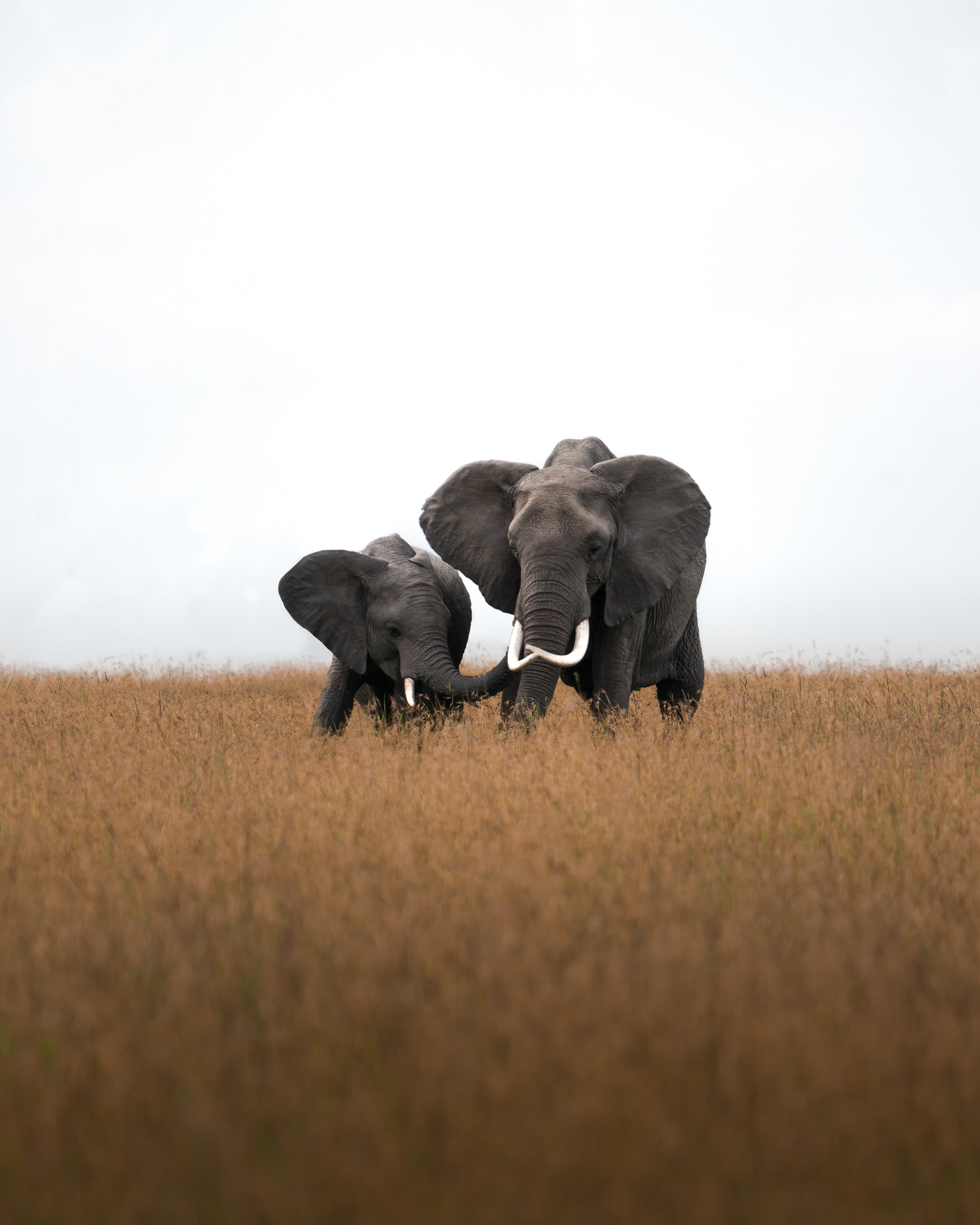
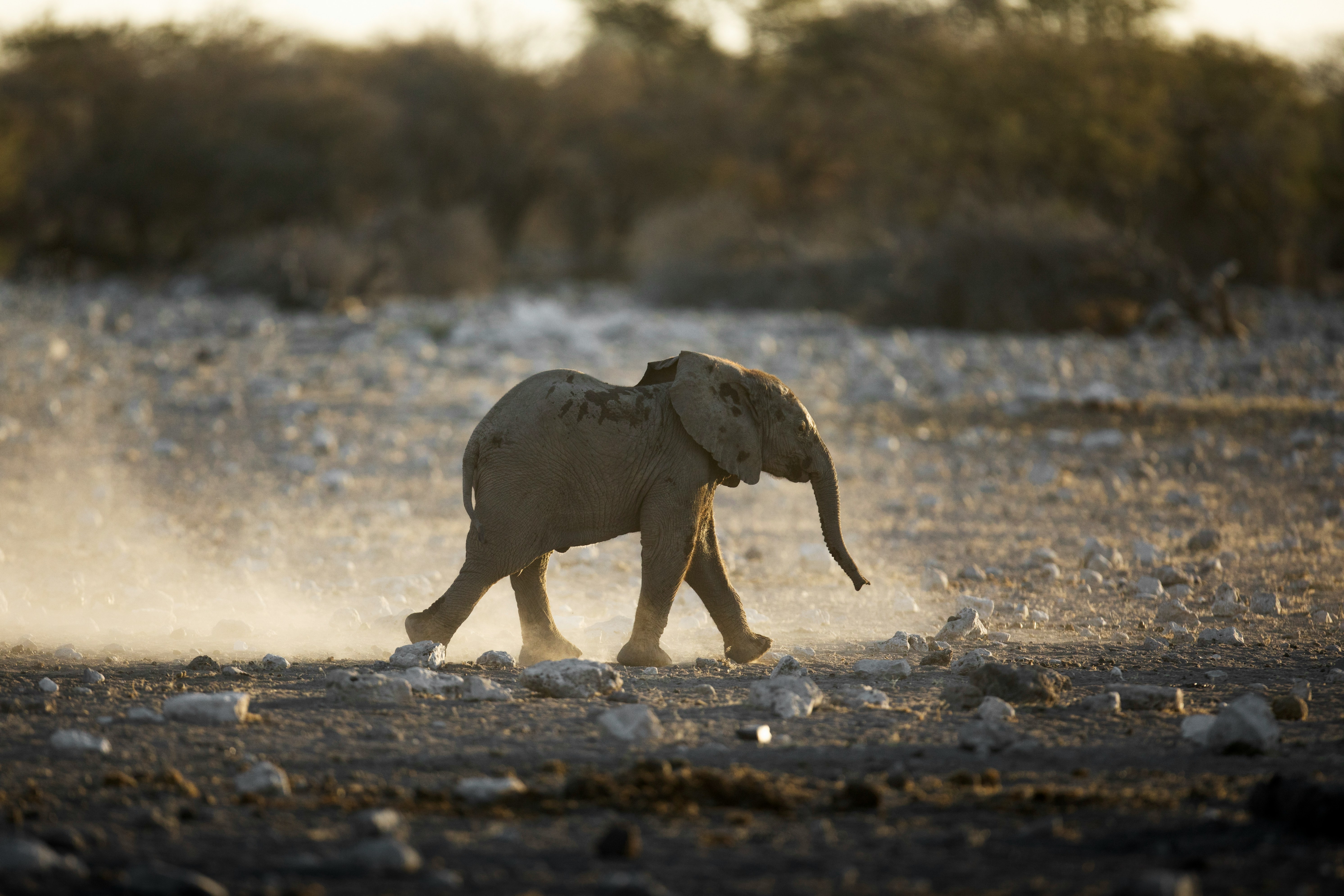
Elephants are the largest land mammals on Earth and among the most cognitively complex animals studied. For millions of years, these gentle giants have acted as ecosystem engineers. They have shaped the landscapes around them and maintained sprawling grasslands used by countless other species. Despite their immense size and cultural significance, elephants have suffered catastrophic declines due to poaching, habitat loss, and escalating conflict with humans.
The evolutionary journey of elephants spans roughly 60 million years, beginning with small, swamp-dwelling ancestors that gradually developed trunks and tusks. The modern African and Asian elephant lineages fully emerged between 2 and 5 million years ago. Having roamed the planet long before the arrival of modern humans, these ancient giants have been actively engineering and shaping Earth’s ecosystems for millions of years.
Living Species: 3
African Elephants: Approximately 415,000
Asian Elephants: Approximately 48,000–50,000
Current Population Trend: Decreasing
Habitat: Savannas, grasslands, woodlands, tropical forests, wetlands, and semi-arid landscapes
Social Structure: Matriarchal family groups
Lifespan: Up to 60-70 years
Weight: Males 4,500 to 5,900 kg (10,000 to 13,000 lbs) Females 3,000 to 4,000 kg (6,600 to 8,800 lbs)
Height: Up to 13 feet at the shoulder
Diet: Herbivore

All three living elephant species are threatened with extinction on the IUCN Red List. The African savanna elephant and Asian elephant are classified as Endangered, while the African forest elephant is Critically Endangered.
_edited.jpg)

_edited.jpg)


About Elephants
For millennia, elephants have been a symbol of wisdom and have left a massive footprint on human history, holding sacred and symbolic roles across many Asian cultures and marching across the Alps as ancient tanks of war with Hannibal.
Elephants are highly intelligent and socially complex animals capable of problem solving, cooperation, empathy, self-recognition, and long-term memory. Family groups are led by experienced matriarchs whose knowledge of migration routes, seasonal resources, and water sources can determine the survival of entire herds. Female elephants remain with their families for life, while males typically leave the herd and become increasingly independent as they mature.
Few animals shape landscapes as dramatically as elephants. Spending up to 18 hours a day consuming 150 to 170 kg of grasses, bark, roots, and fruit, their massive appetites drive their role as ecosystem engineers. By knocking down trees, opening pathways, digging for water, and dispersing seeds, elephants actively reshape the habitats used by countless other species.




The Next Generation of the Herd
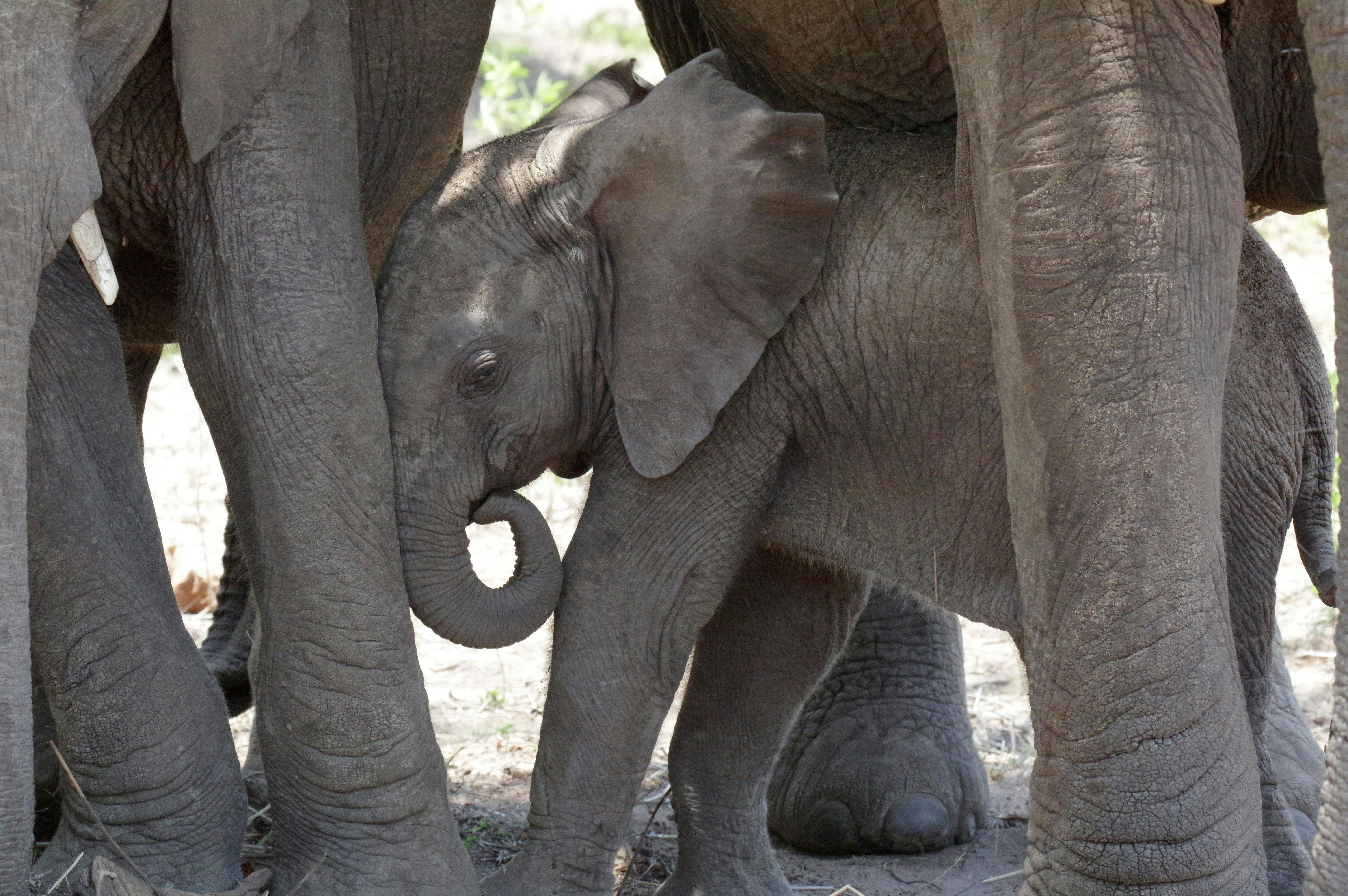
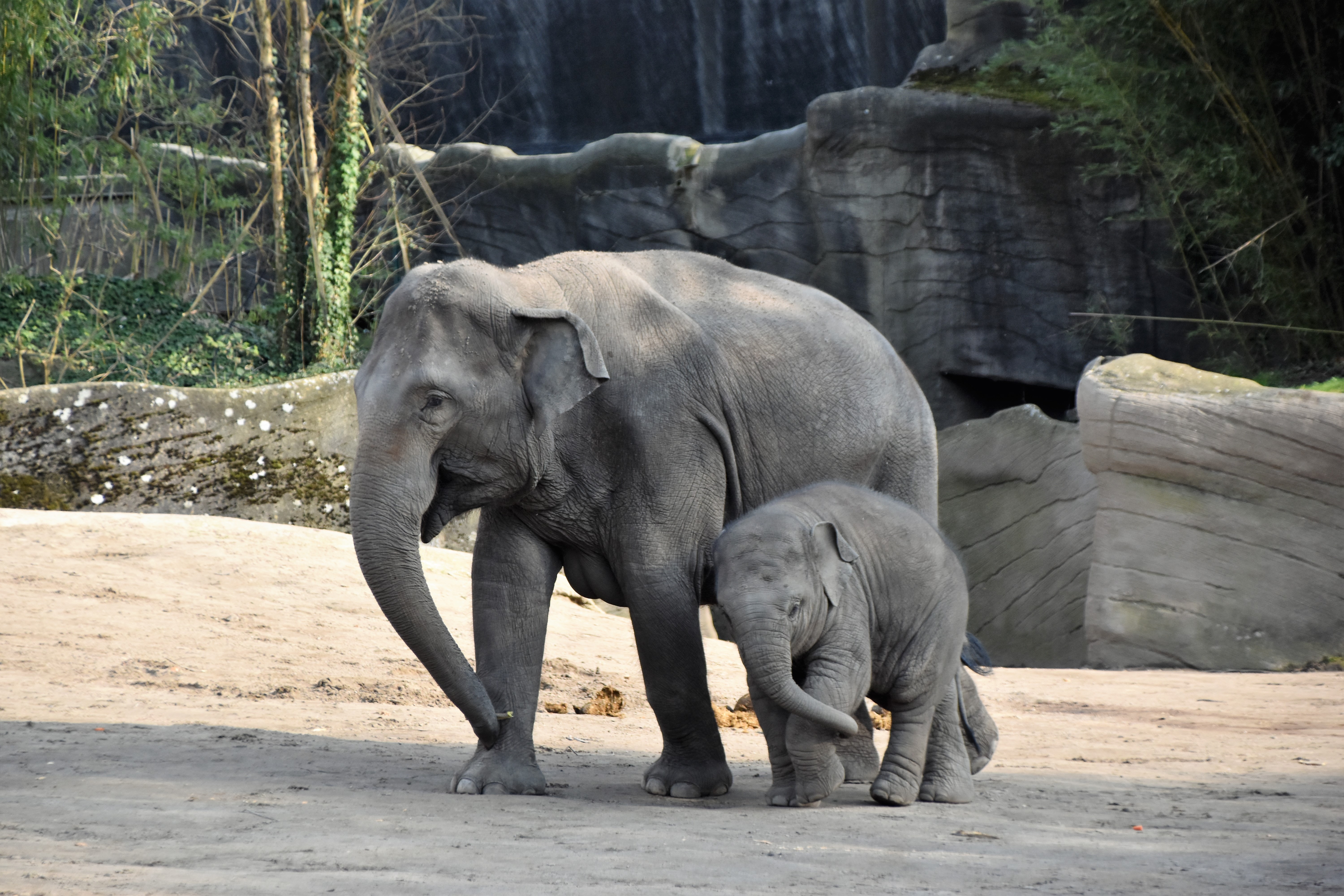
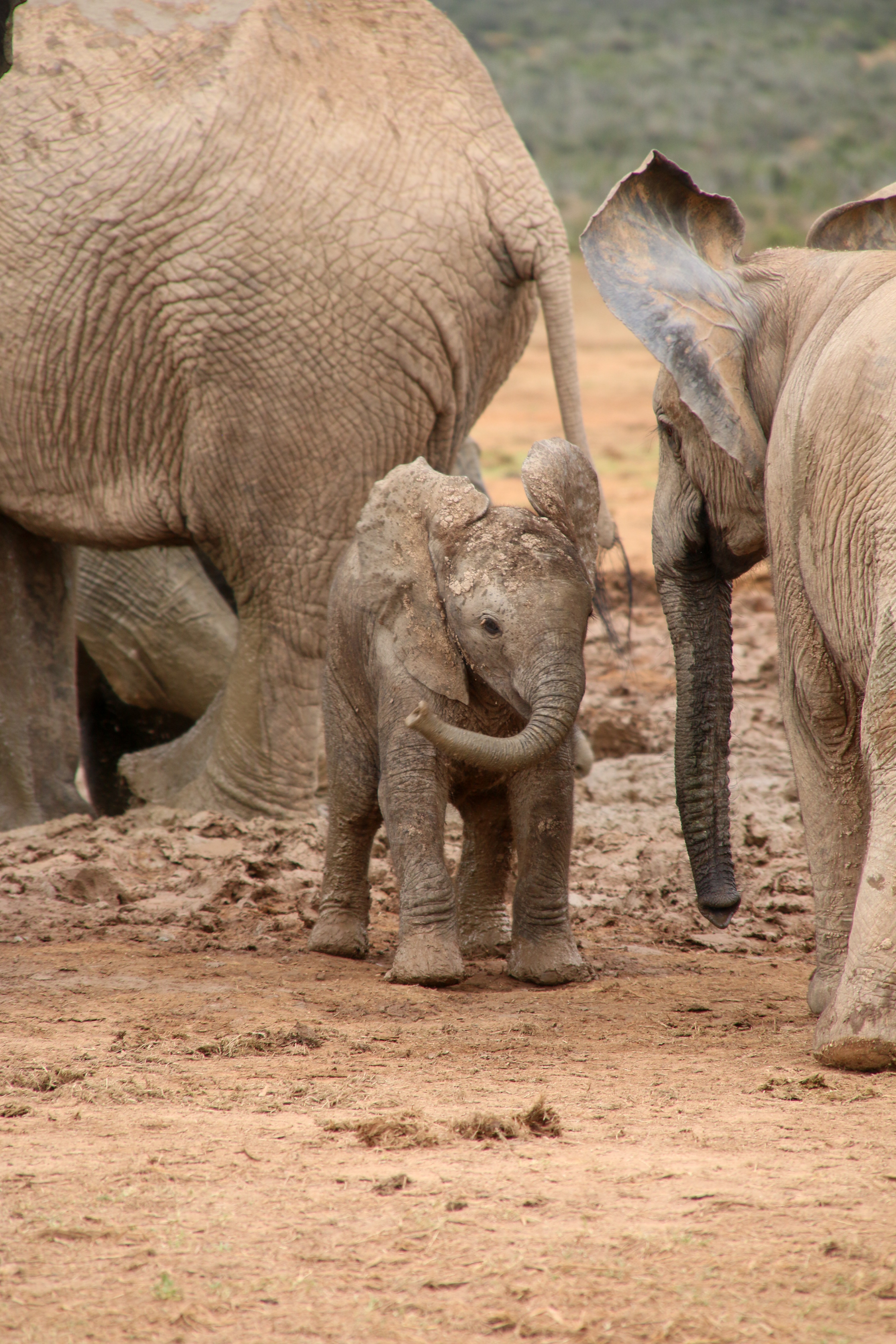
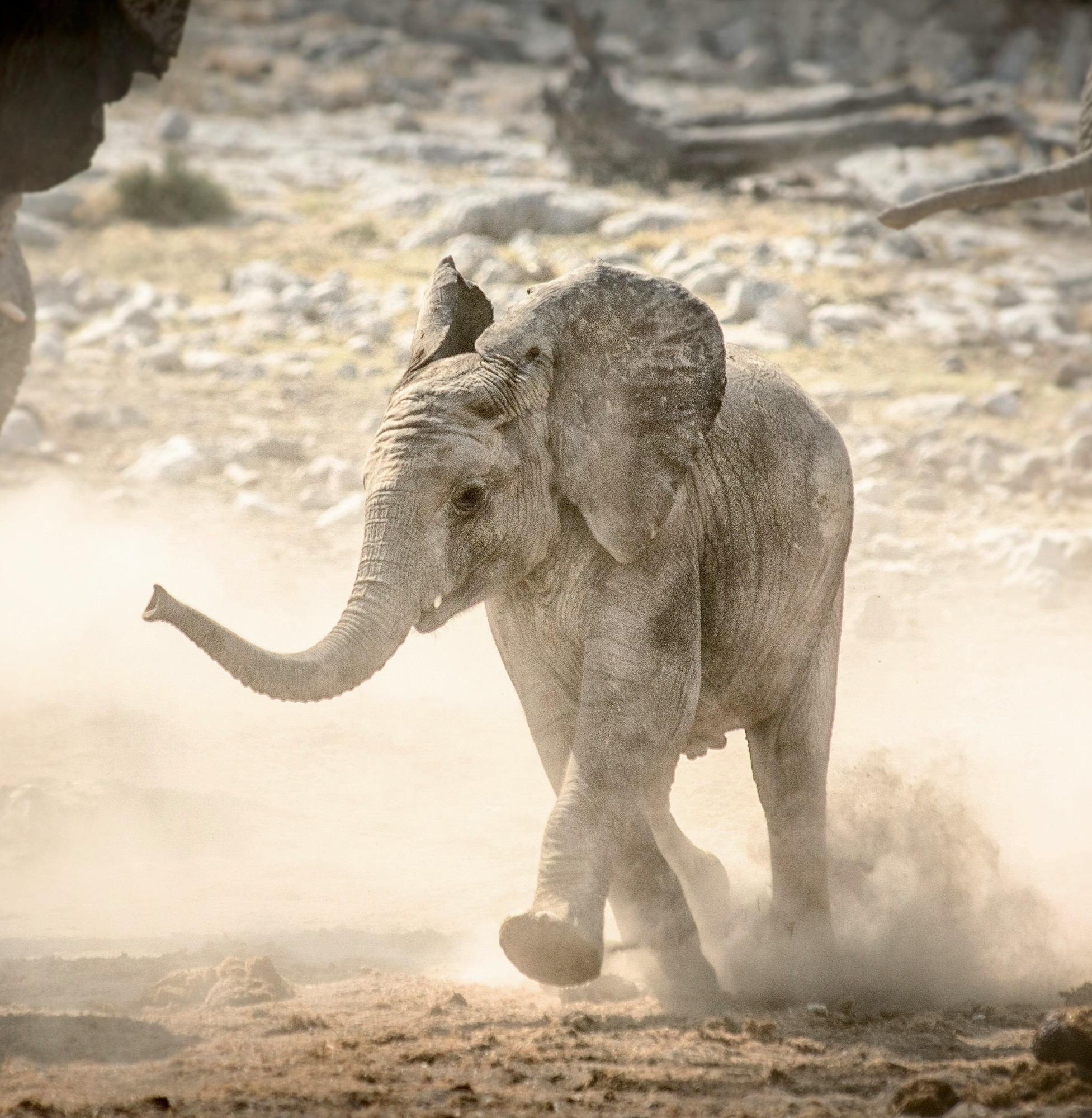
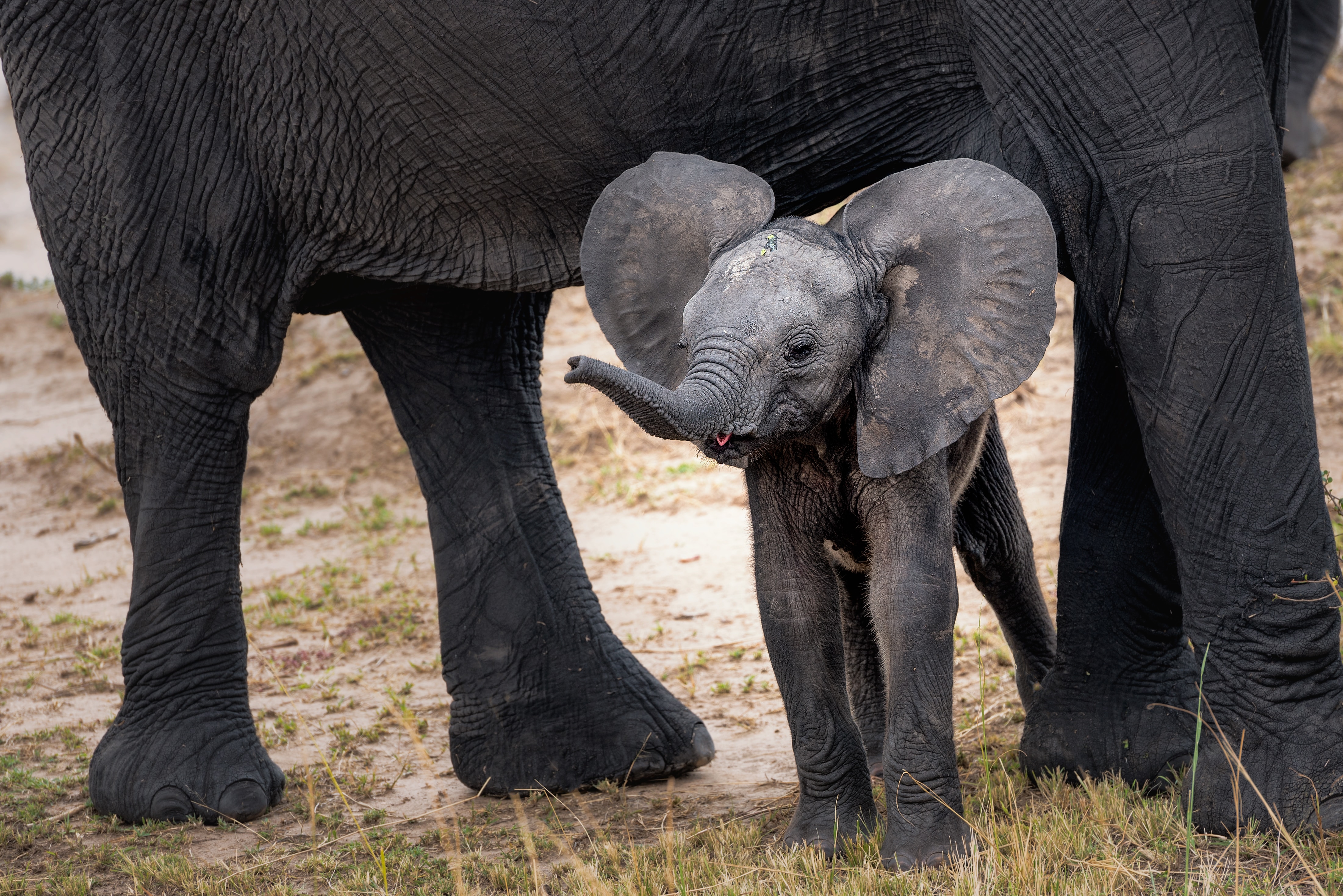
After a long twenty-two month pregnancy, a mother elephant gives birth to a single, large calf that already weighs about two hundred pounds. Unlike big cats, elephant mothers are never alone; they live in close-knit family groups led by an older female called a matriarch. The entire herd welcomes the newborn, and all the aunts and sisters work together as a team to protect, comfort, and guide the calf. At first, the calf is clumsy and does not even know how to use its trunk, often stepping on it or tripping over it while learning to drink milk. The young elephant depends heavily on its mother's milk during its early years, gradually learning which plants are safe to eat by watching older females. The calf will stay safely by its mother's side for many years, wrapped in the protection of the herd.

Did you know?
Their Tusks Are Actually Teeth.
Elephant tusks are enlarged incisor teeth that first appear when elephants are around two years old. They continue growing throughout their lives.
The Ultimate Multi-Tool.
An elephant's trunk is a bone-free combination of the nose and upper lip containing over 150,000 distinct muscle units. The most sensitive organ found in any mammal, the trunk serves as a tool for greeting, a snorkel for swimming, and a siphon capable of holding up to eight litres of water at a time.
Born to Move.
A newborn elephant calf can weigh around 200 pounds at birth. An incredible survival adaptation that allows the herd to keep migrating for food and water. A calf can stand within twenty minutes of being born, walk within an hour, and fully keep up with the herd after just two days.
Seismic Conversations.
Elephants communicate through a complex mix of trumpet calls, body language, touch, and scent. Remarkably, they also send and receive seismic signals by generating low-frequency vibrations in the ground that other elephants can detect through the sensitive bones in their feet and legs.
Profound Emotional Bonds.
Elephants form exceptionally strong social bonds and display complex emotional behaviours. They openly display a wide spectrum of emotions, from joy and celebration when reuniting with loved ones to visible grief and mourning over the loss of a herd member.
An Elephant Never Forgets.
The old saying is grounded in remarkable biology. Elephants possess exceptional long-term memory, allowing experienced individuals—particularly matriarchs—to remember migration routes, distant water sources, seasonal resources, and other elephants encountered years earlier. This accumulated knowledge can become critical to a herd's survival during drought and other environmental extremes.
The Last Super-Tuskers
Super-tuskers are among the rarest elephants on Earth. These extraordinary bulls carry tusks so immense that each weighs more than 100 pounds (45 kg), with some nearly scraping the ground as they walk. Once widespread across Africa, fewer than 30 are believed to remain today, making them one of Africa's most extraordinary living natural treasures.
Decades of ivory poaching and selective hunting have disproportionately removed many of Africa's largest-tusked elephants. Today, the few surviving super-tuskers represent not only some of the continent's oldest bulls, but an increasingly rare expression of extraordinary tusk size. Their survival has become a powerful symbol of elephant conservation across Africa.
Read the full story → The Last Sovereigns of the Savanna: Why Africa's Super-Tuskers Are Facing Extinction


Where They Roam
Elephants once ranged across far larger areas of Africa and Asia than they do today. Their remaining populations are increasingly fragmented, with African elephants concentrated across eastern, southern, central, and parts of West Africa, and Asian elephants surviving in scattered populations across South and Southeast Asia.
Africa is home to two distinct species of elephants, each uniquely adapted to its environment:
-
African Bush Elephant (Loxodonta africana)
The larger of the two species, these wandering giants dominate the open savannas, grasslands, and desert regions of eastern and southern Africa. They are characterized by their massive size and large, fan-like ears that help dissipate heat under the intense African sun.
-
African Forest Elephant (Loxodonta cyclotis)
Residing in the tropical forests of Central and West Africa, particularly the Congo Basin, forest elephants are noticeably smaller and darker than their savanna cousins. Their downward-pointing, straighter tusks are well suited to navigating through dense jungle undergrowth without becoming entangled.
Asia is home to the third living elephant species:
-
Asian Elephant (Elephas maximus)
Smaller than African elephants, Asian elephants inhabit forests, grasslands, and scrublands across South and Southeast Asia. They have smaller, more rounded ears than African elephants, and only some males develop prominent tusks.

The Amazon is the largest tropical rainforest on Earth, spanning 6.7 million square kilometers across nine South American countries.


The African savanna in Tanzania
Why Elephants Matter
To lose the elephant is to lose the very heartbeat of the African wilderness. As ecosystem engineers, these magnificent creatures perform an irreplaceable role that sustains thousands of other species. By clearing dense vegetation, digging for water, and dispersing seeds across vast distances, they single-handedly maintain the balance of savanna's and forests alike. Elephants are the ultimate anchors of biodiversity. Protecting them is not merely an act of compassion for a deeply intelligent species, it is an absolute ecological necessity to safeguard the interconnected web of life across the entire continent.
Threats
Habitat Loss and Fragmentation
As agricultural fields, roads, settlements, and major infrastructure developments rapidly expand, elephant habitats are shrinking and becoming increasingly fragmented. Today, African elephants occupy only a fraction of their historical range, leaving many populations isolated in disconnected landscapes and restricting access to food, water, migration routes, and other elephants.
Human-Elephant Conflict
With ancient migratory routes increasingly blocked by fences and development, elephants are increasingly pushed into human-dominated spaces. This proximity leads to intense competition for space and resources. Driven by necessity, elephants frequently raid agricultural crops and destroy property, sparking dangerous encounters with local communities that tragically claim the lives of hundreds of humans and elephants each year.
Climate Change and Drought
Severe droughts and shifting rainfall patterns can reduce access to water and vegetation across elephant landscapes. As resources become scarcer, elephants may travel farther in search of food and water, intensifying competition and increasing the likelihood of conflict with surrounding communities.
Illegal Ivory Trade
The relentless global black-market demand for ivory remains one of the most immediate and devastating threats facing elephants. Poaching syndicates target mature adults for their tusks, decimating populations, tearing apart complex social structures, and leaving behind orphaned calves who struggle to survive without the protection of the herd.

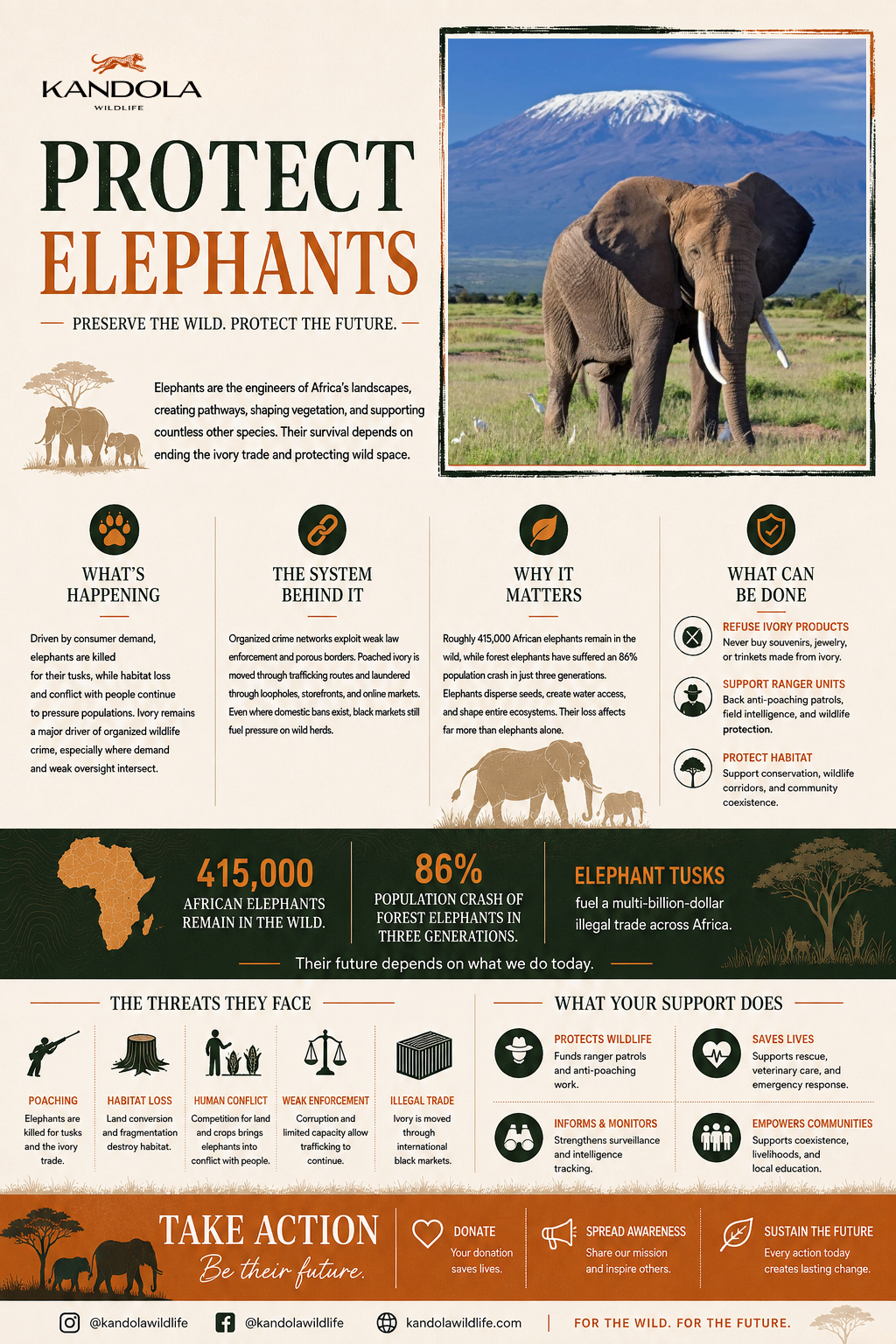
The Illegal Ivory Trade
What’s Happening . . .
The System Behind It . . .
Driven by consumer demand, elephants are slaughtered for their tusks, which are carved into luxury status symbols, jewelry, and intricate ornamental artwork. A devastating combination of commercial poaching for the illegal ivory trade, rapid habitat loss, and escalating conflict with growing human communities has caused their populations to plunge dramatically over the last century, threatening the future of both African savanna and forest species.
Organized crime networks exploit weak law enforcement and porous borders. Traffickers can use legal markets and regulatory loopholes to launder illegally sourced ivory, while illicit trade continues through physical and online markets. Despite major domestic ivory bans, trafficking persists across international supply chains.
Why It Matters . . .
Roughly 415,000 African elephants remain in the wild, with forest elephants suffering a population decline of more than 86% over 31 years. Every single elephant lost to poaching tears apart complex, matriarchal family structures, leaving behind traumatized, orphaned calves who struggle to survive alone. Removing these critical ecosystem engineers destabilizes entire landscapes, as the loss of their natural land clearing and seed dispersal can have cascading effects on biodiversity that threaten countless other species.
What Can Be Done . . .
Refuse ivory products: Never purchase souvenirs, jewelry, or trinkets made of ivory. Be vigilant when traveling abroad, as legal loopholes in regional markets can mask illicit origins.
Support ranger units: Back initiatives like Sheldrick Wildlife Trust and Save the Elephants that fund anti-poaching ranger patrols, mobile veterinary emergency units, and aerial surveillance technology in critical wilderness areas.
Every tusk costs a life.


.png)
Conservation Efforts
Amboseli Ecosystem, Kenya
Serving as the home of the Amboseli Trust for Elephants, one of the world’s longest-running studies of wild elephants, this landscape provides invaluable multi-decade behavioral research. It is globally celebrated as a crucial refuge for some of Africa’s last remaining super tuskers, which are rare bulls with magnificent, ground-sweeping ivory.
Tsavo Conservation Area, Kenya
Spanning one of Africa’s largest protected wilderness ecosystems, Tsavo serves as a vital frontier refuge for massive elephant herds. This vast, remote terrain is actively monitored by groups like the Sheldrick Wildlife Trust to protect both established and emerging generations of giant tuskers from poaching pressures.
Chobe National Park, Botswana
Renowned for its rich river density and vast Kalahari plains, Chobe supports one of the largest continuous elephant populations remaining on Earth, making it a cornerstone for southern African elephant security.
Greater Kruger Ecosystem, South Africa
Representing a massive, interconnected network of public and private reserves, this ecosystem stands as a primary stronghold for southern African elephant populations, offering highly protected, expansive landscapes where herds can thrive safely.
Community-Led Conservation
True protection begins with local partnerships. By securing critical wildlife migration corridors, implementing innovative early warning systems (such as the beehive fences pioneered by Save the Elephants), and providing fair crop-damage compensation programs, conservationists actively reduce conflict and foster peaceful human-elephant coexistence.
Advanced Research and Monitoring
Modern field strategies heavily rely on technology to outmaneuver threats. By utilizing real-time GPS tracking collars, conducting widespread aerial surveys, deploying remote camera traps, and using trade monitoring, seizure data, and forensic analysis to identify trafficking routes and trace the origins of illegal ivory, scientists continuously evolve and optimize dynamic protection strategies.