Born Wild. Sold as Status.
Inside the illegal cheetah pet trade.
KANDOLA WILDLIFE

Photo by Cheetah Conservation Fund (CCF)
A cheetah beside a luxury car or on a leash may be presented as a display of wealth. What that image leaves out is the animal’s journey into captivity and the lives lost before a buyer ever takes possession.
For cheetah cubs taken from the wild, that journey begins with separation from their mother. It can end in death during transport or a lifetime dependent on human care. The appeal of owning something rare carries a cost paid by the animal.

Taken before they can survive alone
The Cheetah Conservation Fund (CCF) estimates that around 300 cheetah cubs are taken from the wild each year for the illegal pet trade, mainly from the Horn of Africa and largely to supply buyers on the Arabian Peninsula.
CCF identifies Ethiopia, northern Kenya, Somalia and Somaliland as places from which trafficked cheetahs are believed to originate. A key route runs through Somaliland, with cubs moved from its coast towards Yemen and onwards into the Arabian Peninsula.

During transport, cubs can suffer dehydration, malnutrition, injury and extreme stress. Many die before reaching their destination. Those intercepted alive may already need urgent treatment.
An April 2017 report by The Dodo described the discovery of nine cheetah cubs and one adolescent in crates in Somaliland, reportedly bound for the Arabian Peninsula. Three cubs were particularly weak and underweight. The case exposed the suffering behind a transaction that, to a buyer, might appear as simple as acquiring an unusual pet.

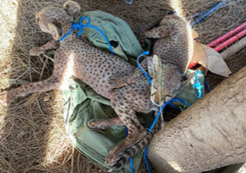
Left: Adolescent cheetah seized alongside nine cubs in Somaliland in April 2017. Photo by Cheetah Conservation Fund (CCF) Right: Cheetah cubs confiscated in April 2023 in Ethiopia's Somali Regional State. Photo by the Bureau of Environment Protection and Rural Land Administration, Somali Regional State
Survival does not mean freedom
Confiscation can save a cub’s life without restoring its future in the wild. The International Fund for Animal Welfare (IFAW) explains that rescued cubs can rarely be released, having been deprived of the opportunity to develop or retain the skills needed to survive independently.
Cheetahs also require specialist nutrition, veterinary care and space to exercise. Affection from an owner does not remove those needs. A private collection cannot provide the life a wild cheetah evolved to live.
The loss extends beyond the individual. Removing cubs takes potential future breeding animals out of populations already under pressure from habitat loss, declining prey and conflict with people. Protecting cheetahs means keeping them within functioning wild populations as well as caring for those already rescued.
A ban needs action behind it
In January 2017, The Dodo reported on the UAE’s prohibition of dangerous wild animals as pets—a significant development in a country where exotic animal ownership had been associated with status.
The UAE government identifies Federal Law No. 22 of 2016 as the law regulating possession and trade in dangerous animals, restricting their keeping to authorised facilities. Cheetahs are not lawful private pets simply because an owner can afford them.
The April 2017 seizure, reported just months after the ban, illustrates why legislation must be followed by enforcement. Investigations, cooperation between countries and a reduction in buyer demand are needed to interrupt the trade.
IFAW’s work includes training officials along trafficking routes and strengthening cooperation between law enforcement agencies in the Horn of Africa and Arabian Peninsula. Effective intervention must also prepare authorities to handle confiscated animals and preserve evidence.
Protecting cheetahs where the trade begins
Prevention also depends on the people living alongside wildlife. Poverty, limited livelihood opportunities and conflict with predators can create conditions in which trafficking takes hold.
In December 2025, CCF described a program for communities around Geed-Deeble in Somaliland that would support women farmers, diversify household income and improve livestock protection. These measures address the pressures that can make wildlife crime a source of income, while helping communities protect the animals sharing their landscape.
Rescue remains essential. Prevention gives future cubs a chance never to enter the trade.
Keep cheetahs wild
Do not buy cheetahs or promote their ownership as pets. Avoid liking or sharing content that celebrates private ownership; share information that explains its consequences instead. CCF also accepts confidential reports of suspected illegal activities involving cheetahs.
Support conservation work that combines care for confiscated animals with enforcement and community protection.
A cheetah’s future should not be decided by its value to a collector.
Sources: CCF, CCF UK, The Dodo, IFAW, UAE Government


