The Last Sovereigns of the Savanna: Why Africa's Super-Tuskers Are Disappearing
Updated: Aug 27
KANDOLA WILDLIFE

Deep within the unfenced, dust-veiled corridors bridging Kenya and Tanzania, an ancient lineage is quietly walking its final miles. These are Africa's super-tuskers—rare bull elephants carrying a remarkable genetic legacy that allows their tusks to grow so immense they scrape the earth beneath them.
Once, these gentle giants ruled the continent. Today, scientists estimate that only around 30 of these magnificent animals remain across all of Africa. They are not just an endangered demographic; they are the living libraries of a vanishing evolutionary masterpiece.
What Makes a Super-Tusker?
An elephant is classified as a super-tusker when each of its tusks weighs more than 45 kg (100 lbs). By comparison, the tusks of a typical adult elephant weigh around 23 kg (50 lbs) each.

Super-Tusker Elephant 
Typical Adult Elephant
These gargantuan tusks require a perfect storm of mature age—usually over 50 years—and exceptionally rare genetics. To witness a super-tusker in the wild is like stepping back into the Pleistocene epoch. They move with an unmatched, slow-motion grace, carrying an immense physical burden that serves as both a biological status symbol and, tragically, a target.
Why Super-Tuskers Matter


Super-tuskers are far more than biological curiosities. As some of the oldest bulls in Africa, they carry decades of ecological knowledge, navigating seasonal migrations, locating hidden water sources during droughts, and passing behaviours through generations. Their exceptional genetics also represent an irreplaceable part of the African elephant's evolutionary diversity. Losing them would mean not only losing some of the continent's most iconic animals, but an entire genetic legacy that may never evolve again.
The Ultimate Target: An Unnatural Selection
The very trait that makes these monarchs magnificent is also what marks them for death. For centuries, humans have relentlessly hunted elephants for their ivory, reducing one of nature's greatest evolutionary achievements into a commodity for luxury carvings, ornaments, and status symbols.
But the obsession with ivory has done more than deplete their numbers. It has triggered an unprecedented, artificial evolutionary shift.
The Rise of the Tuskless Elephant
In areas historically ravaged by heavy poaching and armed conflict—such as Gorongosa National Park in Mozambique—human hunting pressure has quite literally forced a rewrite of elephant anatomy. Because poachers systematically targeted animals with the largest ivory, elephants born without tusks suddenly gained a massive biological advantage: survival.

The Genetic Shift: Research in Gorongosa linked the rapid rise in tusklessness after intense ivory poaching to inherited genetic changes associated with tusk development. Among the adult female elephants that survived the Mozambican Civil War, just over half were tuskless. The research also suggests that the inherited trait may be lethal in some male embryos, helping explain why tusklessness is seen primarily in females.
A Bittersweet Shield: While being tuskless spares female elephants from a poacher's bullet, it comes at a steep ecological cost. Tusks are an elephants "Swiss Army knife"—vital for digging for water, stripping nutrient-dense tree bark, and clearing pathways. Furthermore, the specific genetic mutation responsible for tusklessness can be fatal to male calves in the womb, causing a severe imbalance in herd demographics.
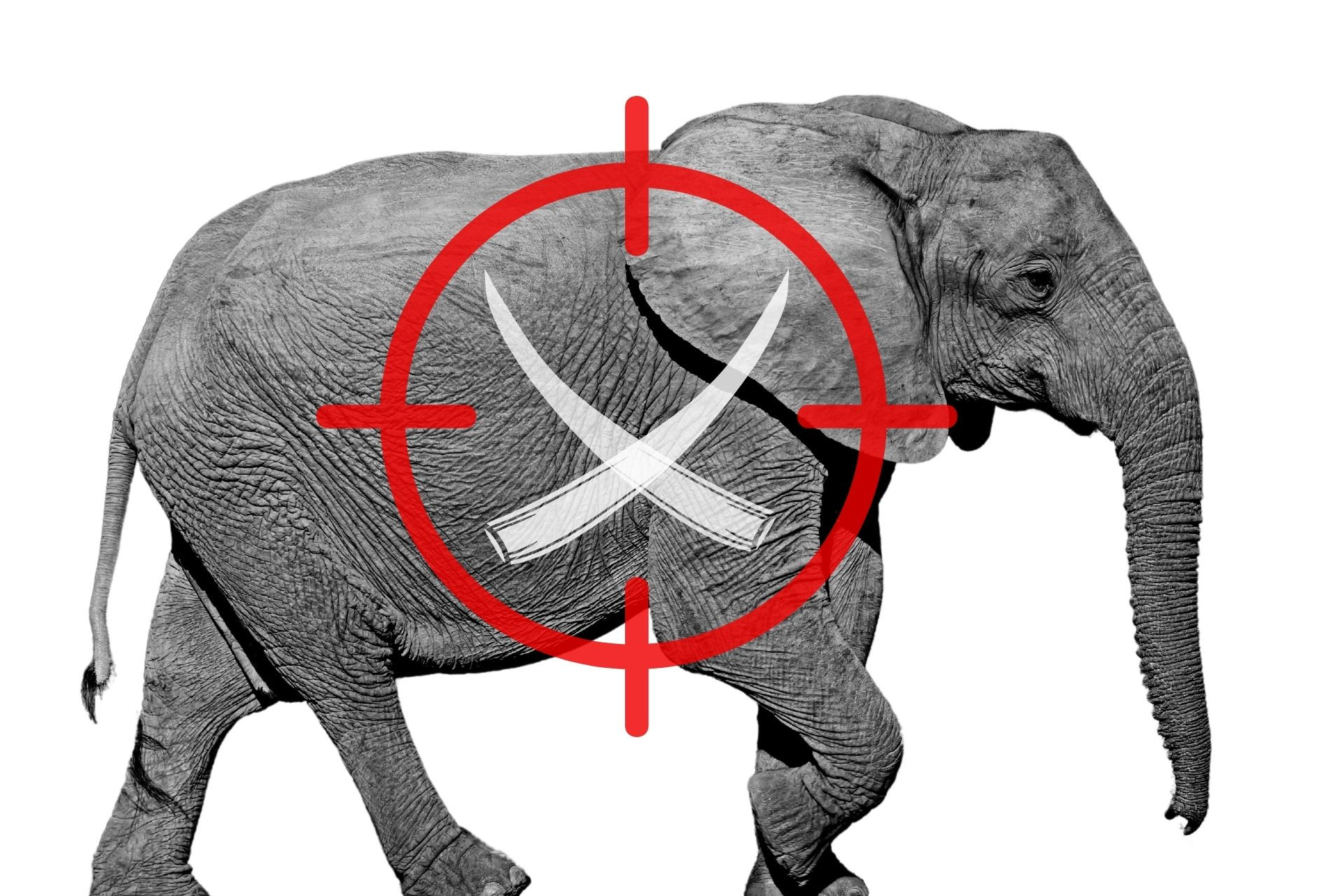
While some elephant populations are adapting to survive human persecution by losing their iconic ivory altogether, the few remaining super-tuskers represent the absolute antithesis of this trend—they are an exceptionally rare expression of large-tusk traits.
The Cross-Border Threat of Trophy Hunting
Having successfully survived decades of intense poaching crises, extreme climate-induced droughts, and rapid habitat fragmentation, the last remaining gentle giants face a highly preventable, human-driven threat: legal trophy hunting. Unlike poaching, these hunts occur within national regulations, yet they can still remove the oldest bulls carrying the rarest genetics from already fragile populations.
The geographic nature of their home range places them in constant jeopardy.

The Perilous Kenya–Tanzania Border
Many super-tuskers roam the Greater Amboseli–West Kilimanjaro ecosystem, moving seamlessly across the border through unfenced wildlife corridors. While Kenya enforced a strict hunting ban decades ago, crossing into Tanzania puts these elephants directly inside active trophy-hunting zones. In recent years, multiple iconic mature bulls connected to this protected Kenyan population were legally targeted and killed for sport in Tanzania, sparking international outrage among conservationists.
Rising Quotas in the South
The pressure isn't isolated to East Africa. In places like Botswana, the legal hunting apparatus operates at a massive scale. Botswana has, in recent years, issued more than 200 elephant trophy permits annually, with a national quota allowing hundreds of elephants to be legally hunted each year. Because trophy hunters naturally seek out the largest, oldest individuals for their collection, the few nomadic super-tuskers left have a permanent target on their backs wherever legal hunting persists.

The story of the super-tusker is a stark reminder of the choices humanity faces regarding wildlife management. We are rewriting the biology of the world's largest land mammal through selective slaughter.
We are now down to fewer than 30. Without stronger cross-border protections and hunting restrictions for these remaining elephants, future generations may know earth-scraping tusks only through photographs—much as we know the woolly mammoth through fossils and paintings.


